Saint-Laurent is one of Montreal's most underrated residential boroughs. While it's best known for Technoparc Montréal, the Aéroparc industrial zone, and the Marché Central shopping corridor, close to 105,000 people actually live here — in a mix of 1960s–1980s apartment towers, low-rise garden complexes, and newer mixed-use condos built around the A-40 and Décarie corridors. If your apartment has a clear view north toward the Laurentians and feels the subtle vibration of planes descending into Trudeau International, you're in Saint-Laurent.
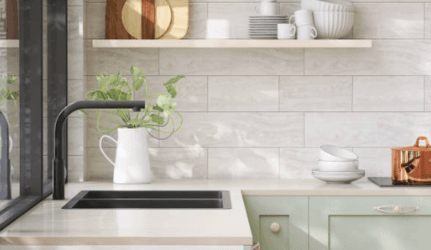
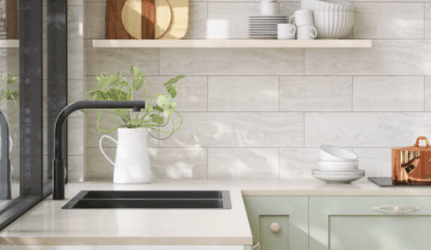
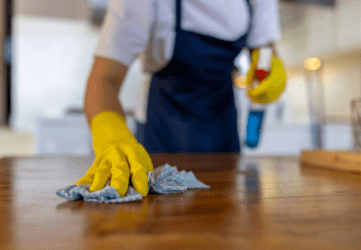
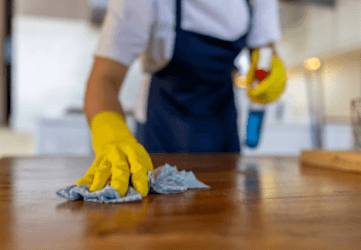
For residential cleaning services, Saint-Laurent's combination of highway proximity, industrial neighbours, and multicultural demographics creates a genuinely distinct set of challenges. This guide breaks down those challenges, what cleaning costs to expect in 2026, and what to look for when booking a cleaning service in the borough.
 *Photo: Unsplash*
Saint-Laurent's Housing Types and Their Cleaning Needs
Understanding Saint-Laurent means understanding that it's not one neighbourhood but a layered urban fabric built across four decades.
1960s–1980s high-rise and mid-rise towers are the defining visual of the borough — 12 to 20-storey buildings along the Décarie corridor, boulevard de la Côte-Vertu, and boulevard Marcel-Laurin. These towers have HVAC and heating systems that pre-date today's filtration standards: baseboard and window-mounted heating units accumulate thick dust pads that need cleaning at every visit. Window tracks facing the A-40 freeway corridor collect fine particulate faster than in sheltered neighbourhoods — the highway generates continuous mineral dust, rubber tyre residue, and de-icing chemical mist that settles on balcony surfaces and interior window sills at an accelerated rate. Elevator corridors and shared hallways bring in tracked material from parking structures and outdoor walkways year-round.
Garden apartment complexes (3-storey walk-ups from the 1970s–1980s) cluster heavily in the western and southern parts of the borough. These units have outdoor-facing corridor access, meaning that in winter, salt and sand tracked from the walkways enters the unit at every entry. Kitchen and bathroom tile grout from this era is softer and more porous than modern tile — it requires patient, non-abrasive technique rather than high-pressure scrubbing.
Modern condos and towers — particularly near the Carré Saint-Laurent mixed-use district and newer Côte-de-Liesse corridor developments — bring a different set of expectations: polished-concrete lobbies with elevator-booking protocols for service teams, glass-panel balcony railings that show every water streak, and condo-declaration rules that may restrict certain products in shared spaces.
Côte-de-Liesse single-family homes in the south of the borough are a smaller but distinct housing type: 1950s and early 1960s brick bungalows with attached garages, finished basements, and yards. These homes have more in common with Ahuntsic-Cartierville (to the northeast) than with the tower districts to the north, and they require the same suburban cleaning protocol — garage threshold tracking, forced-air register vacuuming, and larger square footage per floor.
How Much Does Cleaning Cost in Saint-Laurent in 2026?
Pricing in Saint-Laurent reflects both unit size and the practical reality that highway-adjacent homes and tower apartments with older baseboard heating take longer per square foot than sheltered units. Realistic 2026 CAD ranges:
| Unit type | Recurring clean | Deep clean | Move-in / move-out | |---|---:|---:|---:| | Studio / 1 bedroom | $110–$160 | $200–$280 | $240–$320 | | 2 bedrooms | $150–$220 | $270–$360 | $320–$420 | | 3 bedrooms | $200–$280 | $340–$460 | $400–$520 | | Garden apt / townhouse | $220–$310 | $370–$500 | $430–$560 | | Côte-de-Liesse bungalow | $260–$360 | $420–$580 | $500–$680 |
Get at least two quotes for deep cleans or move-out cleans. Highway-adjacent units and homes with baseboard heaters that haven't been serviced in over a year should budget toward the upper range for deep cleans.
The Highway Particulate Problem — and How to Manage It
The A-40 / Autoroute Métropolitaine runs directly through Saint-Laurent. Homes within 500 metres of the freeway — or with a direct line of sight to the overpass structures — accumulate airborne particulate at a measurably faster rate than homes even a few blocks away. Three main sources:
Rubber tyre dust — fine black residue that builds up on balcony railings, exterior windowsills, and window tracks. It requires a microfibre cloth with a degreasing agent rather than a dry wipe, which only smears it.
Mineral road dust — from pavement surface wear; finer than construction dust and more persistent. It settles inside window track channels and on baseboard heater faces.
Sodium chloride mist — de-icing brine becomes airborne during mild spells; it deposits a faint white residue on glass and stainless surfaces, requiring a diluted white-vinegar or mineral-acid rinse to remove without streaking.
Practically: if your unit faces the A-40 directly, ask your cleaning service to prioritize window track cleaning and balcony surface wiping as standing tasks on every visit, not just for deep cleans.
Technoparc Households and the Professional Cleaning Market
Saint-Laurent hosts Technoparc Montréal — one of Canada's largest science and technology parks, with over 150 companies in aerospace, pharmaceutical, biotech, and software. This creates a residential cleaning market segment unlike almost anywhere else in Montreal: dual-income professional households with demanding schedules and specific hygiene preferences.
Many Technoparc workers spend their days in regulated environments where contamination protocols are part of daily professional life. They tend to request biodegradable, fragrance-free, or allergen-safe formulations — and often ask for an advance product list before the first visit. If you or a household member works in a pharmaceutical or biotech environment, mention this when booking; reputable providers can accommodate product-specific requests.
The Technoparc corridor also drives a consistent corporate relocation cleaning market. Short-term corporate housing near the park changes hands frequently, generating move-in cleans for new international assignees and move-out cleans for departing ones throughout the year.
YUL Airport Proximity — Airbnb and Short-Stay Cleaning
Montréal-Trudeau International Airport sits 3–7 km from most of Saint-Laurent, and the borough lies under the northern approach path. Aircraft descend over it continuously during peak hours. In high-rise units near the flight path, ceiling dust accumulates slightly faster due to vibration loosening settled particulate — if you notice dusty surfaces returning quickly after a clean in a tower near the airport, this is the most likely contributing factor.
The airport proximity also creates steady demand for [Airbnb and short-stay cleaning](/en/services/airbnb-cleaning): business travellers transiting through Trudeau, airline crew on layovers, and corporate visitors to the Technoparc cluster all book short-term stays in the borough. Airbnb turnover cleaning in Saint-Laurent typically requires fast same-day turnaround, hotel-standard linen presentation, and reliable early-morning availability for check-in windows. Building a relationship with a cleaning provider who understands this demand pattern is worth the advance planning.
Multicultural Cooking and Kitchen Cleaning in Saint-Laurent
Saint-Laurent is one of Montreal's most diverse boroughs, home to large Lebanese, Italian, South Asian, Sephardic Jewish, Filipino, and Haitian communities. That diversity shows up directly in kitchen cleaning needs.
Lebanese and South Asian households with regular frying routines accumulate cooking oil on tile backsplashes, range hoods, and cabinet faces at a rate that demands alkaline degreasers and follow-up microfibre wiping rather than standard all-purpose spray. Italian kitchen tile grout saturated with tomato-based sauce residue responds well to pH-balanced enzyme cleaners that lift organic staining without bleaching the grout line. Filipino households with pork-fat cooking accumulate a heavier kitchen grease layer than typical residential households.
If cooking frequency is high in your household, scheduling a deep kitchen clean every 2–3 months in addition to regular recurring service will keep buildup under control without requiring aggressive scrubbing that damages older tile and grout.
Seasonal Cleaning Calendar for Saint-Laurent
Spring (March–May): De-icing salt deposits in window tracks and entrance mats need a thorough flush-out in March–April. Balcony surfaces reveal the winter's accumulated highway particulate once snow melts. Schedule an end-of-winter deep clean in April before you start opening windows.
Late May–June: Cottonwood and poplar fluff season clogs window screen tracks and HVAC intake openings. Check and clean screens before the June heatwave season begins. July 1st move-out cleans are in high demand — book 3–4 weeks in advance.
Fall (September–November): The start of heating season reactivates baseboard heaters and forced-air systems that have been idle since spring, redistributing accumulated dust. A pre-heating-season clean targeting heating units and air registers reduces the "hot dust" smell on the first cold nights.
Winter (December–February): Rock salt and sand from parking structures and outdoor walkways track in daily. Entrance mats need weekly cleaning to prevent buildup migrating through the unit. Bathroom ventilation fans in older towers accumulate dust rapidly in winter due to high indoor humidity contrast.
Frequently Asked Questions
What is the most commonly booked cleaning service in Saint-Laurent? Bi-weekly recurring cleaning is the most popular service type across the borough — in both tower apartments and garden complexes. Highway-adjacent units often upgrade to weekly service because surfaces accumulate particulate faster than in sheltered neighbourhoods, making a fortnightly clean visibly insufficient by the second week.
Do cleaning services in Saint-Laurent handle baseboard heater cleaning? Yes — it's worth requesting explicitly when booking. Tower apartments with baseboard or window-unit heaters accumulate thick dust pads inside the heater housing. Left uncleaned, these redistribute dust through the unit when the heat comes on in fall. Ask your provider to include baseboard and window-heater interiors as a recurring task.
How far in advance should I book a move-out clean in Saint-Laurent? For July 1 move-outs — Quebec's universal lease turnover date — book 3–4 weeks in advance. Saint-Laurent sees high lease turnover volume given its large apartment tower stock, and cleaning teams fill quickly in June. For non-July-1 move-outs, 1–2 weeks' notice is typically sufficient. See our [move-out cleaning checklist for Montreal](/en/blog/move-out-cleaning-checklist-montreal) for what landlords inspect.
Are there product restrictions for cleaning in Saint-Laurent condos? Some condo declarations — particularly in newer towers near the Carré Saint-Laurent district — restrict strong chemicals in shared lobby and corridor areas. For in-unit cleaning, there are typically no declaration restrictions, but households near Technoparc or with medical sensitivities often request biodegradable, fragrance-free formulations. Sparkling Stays can accommodate product preferences — mention them when booking.
Does Sparkling Stays serve Saint-Laurent? Yes. Saint-Laurent is within our Greater Montreal service area. We clean apartment towers, garden complexes, condos, and Côte-de-Liesse bungalows throughout the borough, including the Technoparc corridor, the Décarie strip, boulevard Côte-Vertu, and the Marcel-Laurin zone.
How does cleaning a Saint-Laurent tower differ from a Côte-des-Neiges apartment? The main differences are highway proximity (faster particulate buildup in Saint-Laurent) and heating system type. CDN's older housing stock includes more radiator-heated units; Saint-Laurent towers from the same era use baseboard electric heaters, which require a different maintenance protocol. For kitchen cleaning, the Lebanese and Filipino community presence in Saint-Laurent creates slightly different primary grease profiles compared to CDN's predominantly South Asian and North African cooking demographic.
Book a Saint-Laurent Cleaning Service with Sparkling Stays
Sparkling Stays provides residential cleaning throughout Saint-Laurent and Greater Montreal. Our bilingual, insured teams are familiar with the borough's mix of 1960s–1980s towers, garden apartments, modern condos, and Côte-de-Liesse homes.
[→ Home cleaning service](/en/services/home-cleaning) | [→ Recurring cleaning plans](/en/services/recurring-cleaning) | [→ Move-in / move-out cleaning](/en/services/move-in-out-cleaning) | [→ Deep cleaning service](/en/services/deep-cleaning) | [→ Airbnb cleaning service](/en/services/airbnb-cleaning) | [→ How much does cleaning cost in Montreal?](/en/blog/how-much-does-cleaning-cost-in-montreal) | [→ Ahuntsic-Cartierville guide](/en/blog/cleaning-services-ahuntsic-cartierville-montreal-guide) | [→ Côte-des-Neiges guide](/en/blog/cleaning-services-cote-des-neiges-montreal-guide) | [→ Anjou guide](/en/blog/cleaning-services-anjou-montreal-guide) | [→ Saint-Laurent area page](/en/areas/saint-laurent)