
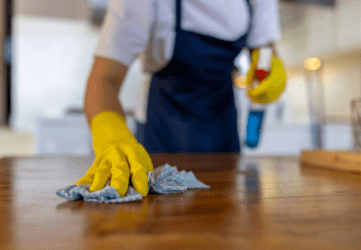
Home Cleaning
Professional recurring and one-time home cleaning for Montreal houses, condos, and apartments. Insured cleaners, eco-friendly products, and flexible booking.
Professional Home Cleaning in Montreal — Reliable, Thorough, and Tailored to Your Life
Take back your time while we take care of your home. Between work, family, errands, and everything else that fills your week, cleaning shouldn't be one more thing on your to-do list. Sparkling Stays delivers consistent, professional residential cleaning tailored to your household routine — whether you need weekly, biweekly, or monthly visits.
We've cleaned thousands of homes across Greater Montreal, and we understand that no two households are the same. A young family in Verdun has different needs than a retired couple in Westmount or a group of roommates in the Plateau. That's why every cleaning plan we offer is customized to your home's layout, your priorities, and your schedule.
What's Included in a Standard Home Cleaning
Our standard home cleaning covers every room in your home — kitchens, bathrooms, bedrooms, living areas, hallways, and common spaces. Here's a detailed breakdown of what our team handles during a typical visit:
Kitchen
- Wipe and sanitize all countertops and backsplash areas
- Clean stovetop, drip pans, and range hood exterior
- Scrub and sanitize the sink and faucet
- Clean microwave interior and exterior
- Wipe down appliance exteriors (fridge, dishwasher, oven)
- Clean cabinet fronts and handles
- Sweep and mop the floor
- Empty trash and replace liner
Bathrooms
- Scrub and disinfect the toilet (bowl, seat, base, and exterior)
- Clean and sanitize the tub and/or shower, including fixtures
- Wipe down vanity, countertop, and sink
- Clean and polish mirrors
- Wipe cabinet fronts and handles
- Scrub tile surfaces and address soap scum
- Sweep and mop the floor
- Empty trash and replace liner
Bedrooms
- Dust all accessible surfaces, nightstands, and dressers
- Make beds and fluff pillows
- Vacuum carpets or mop hard floors
- Dust baseboards and windowsills
- Empty trash bins
Living Areas and Common Spaces
- Dust all accessible surfaces, shelves, and entertainment units
- Vacuum upholstered furniture (light pass)
- Vacuum carpets, rugs, and mop hard floors
- Dust baseboards, door frames, and windowsills
- Wipe down light switches, door handles, and high-touch surfaces
- Tidy cushions and throw blankets
- Empty all trash and recycling bins
How It Works
Booking a home cleaning with Sparkling Stays is straightforward:
1. Request a quote: Tell us about your home — number of bedrooms and bathrooms, square footage, and any special requests. You can do this online or by phone. 2. Choose your schedule: Pick the frequency that works for you — weekly, biweekly, or monthly. One-time cleanings are also available. 3. We confirm your booking: You'll receive a confirmation with your date, time window, and assigned cleaning team. 4. We clean: Our team arrives on time with all products and equipment. We follow your custom checklist and leave your home spotless. 5. You review: After each visit, you can leave feedback. If anything isn't up to standard, we come back and fix it — no extra charge.
We don't require long-term contracts. You can adjust your schedule, skip visits, or cancel at any time with reasonable notice.
Our Products and Equipment
We bring everything needed for a thorough clean — you don't need to supply anything. Our standard kit includes:
- Eco-friendly cleaning solutions: We use biodegradable, non-toxic products that are safe for kids, pets, and people with sensitivities. Our products are effective without harsh chemical fumes.
- Professional-grade vacuum cleaners: Equipped with HEPA filters to capture allergens, dust mites, and fine particles.
- Microfiber cloths and mops: Better at trapping dust and bacteria than traditional cotton materials.
- Color-coded cleaning cloths: We use separate cloths for kitchens, bathrooms, and living areas to prevent cross-contamination.
If you have a preferred product or a specific requirement (e.g., fragrance-free, a particular brand for hardwood floors), let us know and we'll accommodate.
Pricing Context
Our home cleaning rates depend on the size of your home, its current condition, and how often you'd like us to visit. Here's what affects pricing:
- Home size: Larger homes with more rooms take more time and cost more.
- Number of bathrooms: Bathrooms are the most labor-intensive rooms to clean.
- Frequency: Recurring clients receive discounted rates. Weekly visits cost less per session than monthly visits because maintenance cleaning is faster.
- Condition: If your home hasn't been professionally cleaned in a while, the first visit may take longer and cost more (we recommend starting with a deep cleaning).
- Add-ons: Services like interior window cleaning, inside the fridge or oven, or organizing are available for an additional fee.
We provide transparent quotes before your first visit — no hidden fees, no surprises. Contact us for a personalized estimate.
Who Is Home Cleaning For?
Our residential cleaning service is designed for anyone who values a clean home but doesn't have the time, energy, or desire to do it themselves. Our clients include:
- Busy professionals: You work long hours and weekends are precious. A clean home shouldn't require sacrificing your downtime.
- Young families: Between kids, meals, laundry, and activities, keeping up with cleaning is a constant challenge. We handle the heavy lifting.
- Seniors and people with mobility issues: Cleaning can be physically demanding. We make sure your home stays safe, healthy, and comfortable.
- Pet owners: Fur, dander, and muddy paws create extra cleaning demands. We're experienced with pet-friendly homes.
- Roommates and shared households: When multiple people share a space, maintaining a cleaning standard can be tricky. We provide a consistent baseline.
- Anyone who simply prefers to spend their time on other things: There's no guilt in outsourcing cleaning. It's one of the most common household services in Montreal for good reason.
Montreal-Specific Tips for Homeowners
Living in Montreal comes with unique cleaning considerations that we've learned through years of experience in the city:
- Winter salt and slush: From November through March, salt and calcium residue gets tracked into entryways and hallways. Regular cleaning prevents buildup that can damage hardwood and tile floors.
- Spring pollen season: April and May bring heavy pollen counts, especially near parks and tree-lined streets. More frequent dusting and vacuuming during this period helps allergy sufferers.
- Humidity in older buildings: Many Montreal apartments and triplexes have older ventilation systems. Regular bathroom cleaning helps prevent mould growth, especially in units without exhaust fans.
- Moving day (July 1st): If you're not moving but your neighbours are, expect extra dust and debris in common areas. A post-moving-day cleaning can help.
- Hard water in certain boroughs: Some areas of Montreal and Laval have harder water, which leads to mineral buildup on faucets and showerheads. Regular cleaning keeps fixtures looking new.
- Condo rules: Many condo buildings in downtown Montreal have specific rules about cleaning schedules, noise levels, and elevator bookings for service providers. Let us know your building's requirements and we'll comply.
Service Areas
Sparkling Stays provides home cleaning across Greater Montreal, including:
- Montreal Island: Downtown, Plateau Mont-Royal, Mile End, Outremont, Westmount, NDG, Côte-des-Neiges, Verdun, LaSalle, Lachine, Saint-Laurent, Ahuntsic, Rosemont, Hochelaga, Villeray, and more
- West Island: Dorval, Pointe-Claire, Kirkland, Beaconsfield, Dollard-des-Ormeaux, Pierrefonds
- Laval: All sectors including Chomedey, Sainte-Dorothée, Laval-des-Rapides, Vimont
- South Shore: Longueuil, Brossard, Saint-Lambert, Boucherville, Saint-Hubert, Chambly
If your area isn't listed, contact us — we may still be able to accommodate you.
Our Team
Every cleaner on our team is:
- Background-checked: We run thorough background checks before anyone joins our team.
- Insured: Full liability insurance protects you and your property.
- Trained: Each team member completes our training program covering cleaning techniques, product safety, customer service, and Montreal-specific considerations.
- Consistent: We assign the same team to your home whenever possible so they learn your preferences and layout.
We treat our cleaning staff well because we know that happy, valued employees deliver better work. Fair wages, flexible schedules, and a respectful work environment are core to how we operate.
Satisfaction Guarantee
Every visit comes with our satisfaction guarantee. If you're not happy with any aspect of your cleaning, contact us within 24 hours and we'll send a team back to address it — at no additional cost. We want you to be completely satisfied, every single time.
Frequently Asked Questions
Q: How long does a standard home cleaning take?
A typical home cleaning takes between 2 and 4 hours, depending on the size of your home and its condition. A 2-bedroom apartment usually takes about 2 to 2.5 hours, while a 4-bedroom house may take 3.5 to 4 hours. Recurring visits tend to be faster since we're maintaining an already-clean baseline.
Q: Do I need to be home during the cleaning?
No. Many of our clients provide a key, door code, or lockbox access so we can clean while they're at work or out. If you prefer to be home, that's perfectly fine too. We'll work around your comfort level.
Q: What if I have pets?
We love pets and clean many homes with dogs, cats, and other animals. If your pet is anxious around strangers, we recommend confining them to a comfortable space during the visit. Let us know about any pet-related concerns when you book.
Q: Can I customize what gets cleaned?
Absolutely. While we follow a standard checklist, you can add or remove tasks based on your priorities. Some clients want extra attention on kitchens, others want us to skip certain rooms. We're flexible.
Q: What products do you use? Are they safe for kids and pets?
We use eco-friendly, biodegradable, non-toxic cleaning products. They're safe for children, pets, and people with sensitivities. If you have a specific product preference, let us know and we'll use it.
Q: How do I pay?
We accept credit cards, debit, and e-transfer. Payment is processed after each cleaning. Recurring clients can set up automatic billing for convenience.
Q: What's your cancellation policy?
We ask for at least 24 hours' notice if you need to cancel or reschedule. Late cancellations may incur a fee, as our team has already reserved time for your visit.
Q: Do you clean condos with building access restrictions?
Yes. Many of our clients live in condo buildings with concierge desks, elevator booking requirements, or visitor parking rules. Just provide us with the building's procedures and we'll handle the rest.
Home Cleaning by area
We offer home cleaning services in these Greater Montreal areas:
Montreal
South Shore
West Island
Frequently Asked Questions — Home Cleaning
How much does home cleaning cost in Montreal?
Pricing depends on property size, number of rooms, and frequency. Visit our pricing page for an instant estimate, or contact us for a personalized quote.
Is home cleaning included in a recurring plan?
Yes. If you book recurring service (weekly, biweekly, or monthly), home cleaning is included in your plan. We also offer one-time bookings.
Are you insured for this service?
Yes. Sparkling Stays carries full liability insurance. All team members are background-checked and bonded.
Where do you offer home cleaning?
We provide home cleaning across Greater Montreal, Laval, West Island, South Shore, and 56+ neighborhoods. See our Areas page for the full list.
How do I book home cleaning?
Book online in under 60 seconds at sparklingstays.com/en/book-now or call 438-867-8770. Most appointments confirmed within 24 hours.