
 *Photo: Unsplash*
A streaky bathroom mirror is one of the most frustrating — and avoidable — housekeeping problems in a Montreal apartment. The cause is almost always the same: Montreal's tap water carries 90–150 mg/L of dissolved calcium carbonate, and every shower, every hand wash, and every humid morning leaves an invisible layer of minerals on your mirror glass. When the water evaporates, the calcium stays behind. The result is a hazy, spotted mirror that smears no matter how many times you wipe it.
This guide explains how to clean a bathroom mirror without streaks in Montreal — including how to remove hard-water calcium buildup, how to clean a bathroom vanity and sink, and how to prevent your mirror from fogging and re-streaking within days.
Why Montreal Bathroom Mirrors Streak Faster Than Anywhere Else
Montreal's municipal water is drawn from the St. Lawrence River and processed to a hardness of 90–150 mg/L of calcium carbonate (CaCO₃) — among the hardest water supplies of any major Canadian city. Every water droplet that lands on your mirror glass carries dissolved calcium, magnesium, and bicarbonate salts. When the water evaporates, those minerals are deposited directly onto the glass surface as a thin white film.
In a Montreal bathroom, this happens constantly:
- Shower steam: Hot shower steam condenses on the cold mirror surface. As the moisture evaporates, it deposits another calcium layer.
- Sink splashes: Hand-washing, tooth-brushing, and face-washing send fine water droplets onto the mirror surface multiple times per day.
- Poor ventilation in pre-war triplexes: Many NDG, Plateau-Mont-Royal, Rosemont, HoMa, and Villeray triplexes built between the 1890s and 1950s have bathrooms without exhaust fans — or with exhaust fans that vent into the attic rather than outdoors. Without proper ventilation, bathroom humidity after a shower reaches 85–90% relative humidity, and the mirror stays damp for 30–60 minutes after every shower. This extended contact time dramatically accelerates calcium deposition.
The result: Montreal bathroom mirrors develop a visible calcium haze within 2–4 days of cleaning, compared to 10–14 days in cities with soft water.
Tools You Need for a Streak-Free Mirror
Using the right tools eliminates 80% of the streaking problem before you even choose a cleaner.
Best choices: - Microfibre cloth (dry) — the gold standard for mirrors. Microfibre picks up mineral residue and cleaner film without shedding lint. Use one cloth to apply the cleaner and a second dry cloth to buff to clarity. - Squeegee — after cleaning, a rubber squeegee (IKEA ~$3; Canadian Tire ~$6–8) removes residual moisture in a single pass without leaving fibres. - Newspaper — the traditional Montreal cleaning trick. Printer's ink acts as a mild polish that lifts calcium film; newspaper doesn't shed lint. Works especially well for light daily maintenance.
Avoid: - Paper towels — shed lint fibres that remain on the glass and cause streaks in light. - Old rags or cotton cloths — leave lint and fibres on the glass surface. - Dirty cloths — any grease, detergent residue, or calcium on a reused cloth transfers directly back to the mirror.
How to Clean a Bathroom Mirror Without Streaks: Step-by-Step
Step 1: Dry-wipe dust and hair spray first
Before applying any liquid, wipe the mirror surface with a dry microfibre cloth to remove hair spray residue, dust, and loose particles. Hair spray (and dry shampoo spray) leaves a silicone film that dissolves in alcohol but will smear with water-based cleaners. Removing it dry first prevents smearing.
Step 2: Choose your cleaner
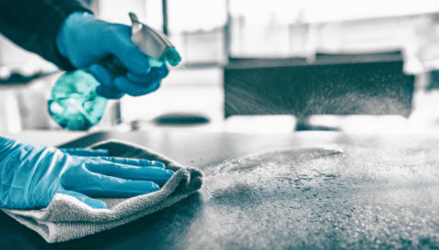
Option A — White vinegar spray (best for calcium buildup): Mix equal parts white vinegar (IGA/Maxi ~$3–5 for 4L) and water in a spray bottle. White vinegar's acidity (5% acetic acid) dissolves calcium carbonate on contact. Spray lightly on the mirror surface — don't oversaturate.
Option B — Commercial glass cleaner: - Windex (Maxi/IGA/Dollarama ~$4–6): ammonia-based, effective on soap scum and light calcium; safe for all mirror types. - Eco-Max Glass Cleaner (Jean Coutu/IGA ~$5–7): vinegar-based, Quebec-made, biodegradable, effective on hard water. - Method Glass + Surface (IGA/Jean Coutu ~$5): plant-based, streak-free on modern mirror glass.
Note: If your bathroom mirror is framed in painted wood (common in pre-war Montreal triplexes), keep the cleaner off the frame — vinegar and ammonia strip alkyd paint finish.
Step 3: Wipe in Z-pattern (not circles)
Apply the cleaner and wipe in a Z-pattern from top-left to bottom-right, working in overlapping horizontal passes. The Z-pattern covers the entire mirror surface and moves dirt away from areas you've already cleaned. Circular wiping spreads the calcium residue in circles — which is exactly how mirror halos and rings are created.
Step 4: Buff dry with a second clean cloth
Immediately buff with a second clean, dry microfibre cloth — do not wait for the cleaner to air-dry. Air-drying is how streaks form. Quick buffing before the cleaner evaporates lifts the dissolved mineral residue off the glass completely.
Step 5: Edge-wipe the frame
Use a damp cloth — not the mirror cloth — to wipe the mirror frame, surrounding tile, or vanity backsplash. Mirror cleaners left on tile grout lines will leave residue.
How to Remove Hard-Water Calcium Buildup (Monthly Deep Clean)
If your Montreal bathroom mirror has not been cleaned with the correct protocol for weeks or months, a simple glass cleaner spray will not remove the accumulated calcium film. You need a slightly stronger acid treatment:
1. Mix 1 part white vinegar : 1 part water in a spray bottle, or use undiluted white vinegar for heavy buildup. 2. Spray the mirror and let it sit for 5 minutes — long enough for the acetic acid to dissolve the calcium carbonate. 3. Wipe clean with a microfibre cloth. 4. If cloudy spots remain, apply a paste of citric acid powder (Bulk Barn ~$5–8/500g): 1 tablespoon citric acid dissolved in 125 mL warm water, applied with a soft cloth, 3-minute dwell, then rinse. 5. Buff dry with a clean cloth.
What NOT to use on mirrors: - Abrasive cleaners (Comet, scouring powder): scratch mirror glass permanently. - Bleach: turns mirror backing oxidized and milky over time. - CLR or heavy-duty calcium remover: too aggressive for reflective mirror coating; use diluted citric acid instead.
Bathroom Vanity: Counter, Sink, and Faucet
The bathroom vanity counter and sink collect the same hard-water calcium film as the mirror, plus soap scum from bar soap and body wash residue.
Weekly vanity clean: 1. Spray the counter with a pH-neutral all-purpose cleaner or diluted dish soap solution. 2. Wipe with a damp microfibre cloth. 3. For calcium ring around the faucet base: apply undiluted white vinegar directly to the ring, cover with a wet paper towel, let sit for 5–10 minutes, scrub with a soft toothbrush, rinse. 4. For soap scum on the sink basin: apply a paste of baking soda and dish soap, scrub with a soft brush, rinse. Bar Keepers Friend (Canadian Tire ~$5–8) is effective for stubborn soap scum on porcelain or ceramic sinks.
Faucet aerator calcium deposits: Montreal tap water builds a thick white calcium collar around faucet aerators and spout bases within weeks. Unscrew the aerator (turn counterclockwise), soak in undiluted white vinegar for 30 minutes, scrub with a toothbrush, rinse, reinstall. This restores full water pressure and removes the calcium blockage.
Medicine Cabinet: Interior and Exterior
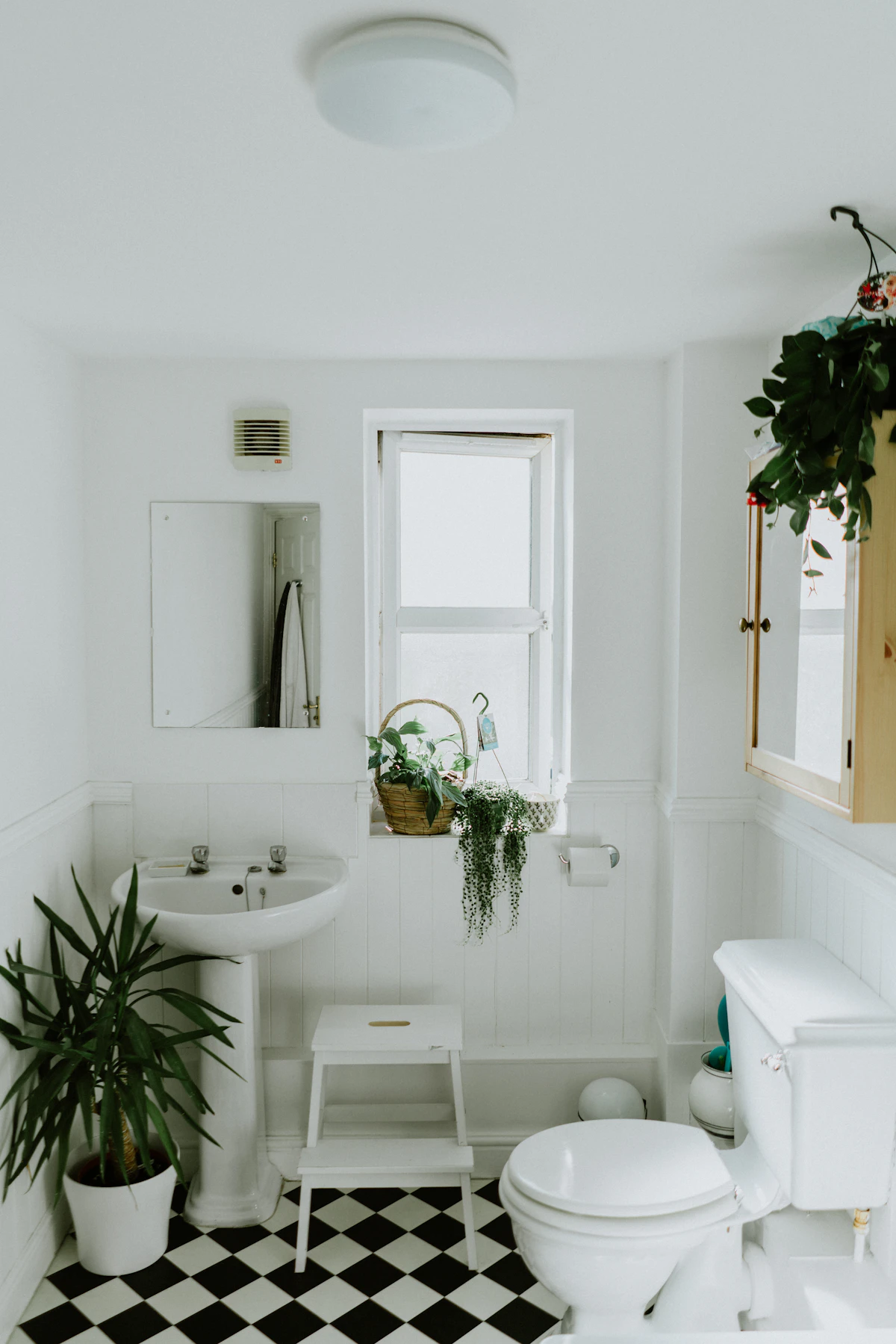
Pre-war Montreal bathroom medicine cabinets are typically recessed into the wall with mirrored doors. The interior collects product residue, dust, and humidity; the door mirror needs the same streak-free protocol as the main mirror.
Interior cabinet clean (quarterly): 1. Remove all products. 2. Wipe shelves with a damp cloth and mild dish soap. 3. Check for rust spots on metal shelf frames — Montreal's humidity accelerates metal rust in bathroom cabinets; Bar Keepers Friend removes minor rust spots. 4. Leave the cabinet open to air-dry before restocking.
Exterior mirror: Same streak-free protocol as the main mirror.
Daily Maintenance: The Squeegee Trick
The most effective way to keep a Montreal bathroom mirror streak-free without daily deep cleaning is to prevent calcium deposition before it happens.
After every shower: 1. Use a rubber squeegee ($3–8 at IKEA/Canadian Tire) to sweep the mirror from top to bottom in two or three passes. 2. Do the same on the shower glass if applicable.
A squeegee takes 15 seconds and removes 90% of the calcium-laden water film before it can evaporate and deposit minerals. In Montreal, this is the single highest-ROI bathroom maintenance habit.
Move-Out Context — TAL Standards
According to the Tribunal administratif du logement (TAL):
- Calcium haze and soap scum on mirror glass after normal use: classified as normal wear in Montreal's hard-water environment. You are not required to restore a mirror to showroom condition at move-out.
- Cracked or shattered mirror glass: tenant liability, regardless of cause.
- Mold on mirror backing (black spots in the reflective silver coating): usually caused by prolonged moisture contact from cleaning with too much liquid. Tenant liability if it developed during the tenancy from improper cleaning.
- Soap scum on vanity counter: normal wear after 12+ months of use; heavy buildup that required professional cleaning may be charged back.
Document the bathroom mirror and vanity condition at move-in with date-stamped photos.
FAQ — How to Clean a Bathroom Mirror in Montreal
Q: How do I get rid of streaks on my bathroom mirror?
A: Streaks on Montreal bathroom mirrors are almost always caused by calcium mineral residue from hard water (90–150 mg/L CaCO₃). To remove them: spray with equal parts white vinegar and water, wait 2–3 minutes, then wipe in Z-pattern with a clean dry microfibre cloth. Never use paper towels — they shed lint fibres that appear as streaks in light. Buff immediately with a second dry microfibre cloth before the cleaner air-dries.
Q: Can I use Windex on a bathroom mirror?
A: Yes — Windex is safe on standard bathroom mirror glass. It's effective on light calcium deposits and soap scum. For heavy Montreal hard-water calcium buildup, white vinegar or Eco-Max Glass Cleaner (vinegar-based, available at Jean Coutu/IGA ~$5–7) is more effective because acetic acid specifically dissolves calcium carbonate. Use microfibre cloths with Windex, not paper towels.
Q: Why does my bathroom mirror fog up and re-streak after every shower?
A: In Montreal pre-war triplexes without exhaust fans (common in NDG, Plateau, Rosemont, HoMa, Villeray), bathroom humidity after a shower reaches 85–90%. The mirror fogs and stays wet for 30–60 minutes, allowing calcium from shower steam to deposit on the glass. Solution: (1) squeegee the mirror immediately after every shower; (2) open the bathroom door after showering to lower humidity; (3) clean monthly with a vinegar solution to remove accumulated deposits.
Q: How do I remove the white cloudy film from my bathroom mirror?
A: The white cloudy film is calcium carbonate scale from Montreal hard water. To remove: spray undiluted white vinegar on the mirror, wait 5 minutes, then wipe with a microfibre cloth. For stubborn film, dissolve 1 tablespoon of citric acid powder (Bulk Barn ~$5–8/500g) in 125 mL of warm water, apply to the mirror with a soft cloth, let sit 3 minutes, then rinse with clean water and buff dry. Never use abrasive cleaners — they scratch mirror glass permanently.
Q: What is the best cleaner for bathroom mirrors in Montreal?
A: For Montreal's hard water, white vinegar (50/50 with water) is the most effective and cheapest streak-free mirror cleaner — approximately $0.05 per clean from a 4L IGA/Maxi bottle ($3–5). Commercial options: Eco-Max Glass Cleaner (vinegar-based, Quebec-made, Jean Coutu/IGA ~$5–7), Windex (Maxi/Dollarama ~$4–6), Method Glass + Surface (IGA ~$5). Avoid ammonia-based cleaners on framed mirrors with painted wood frames.
Q: How often should I clean my bathroom mirror?
A: In Montreal, the calcium deposit cycle means a bathroom mirror shows visible haze within 2–4 days of cleaning. Maintenance protocol: (1) squeegee after every shower (15 seconds, prevents 90% of calcium buildup); (2) full streak-free clean weekly using microfibre and white vinegar spray; (3) deep calcium descale monthly if buildup is visible. Without a squeegee habit, expect to deep-clean weekly during July–August when Montreal humidity is highest (70–75% RH).
---
*For a full bathroom deep-clean, see our [bathroom deep-clean guide](/en/blog/how-to-deep-clean-a-bathroom-montreal). For grout and caulk, see our [bathroom grout and caulk guide](/en/blog/how-to-clean-bathroom-grout-and-caulk-montreal). For bathroom ventilation, see our [bathroom exhaust fan guide](/en/blog/how-to-clean-a-bathroom-exhaust-fan-montreal). Let our team handle it: [deep-cleaning service](/en/services/deep-cleaning) and [home-cleaning service](/en/services/home-cleaning) cover all Montreal neighbourhoods.*

