
 *Photo: Unsplash*
Home gyms have become a permanent fixture in Montreal apartments and condos. Post-pandemic fitness culture, the city's abundant cycling and fitness infrastructure, and the growth of tech and creative industries in Mile-Ex, the Plateau, and Griffintown have made home exercise equipment a standard part of Montreal apartment life. But cleaning gym equipment in a Montreal home presents specific challenges that generic guides miss: summer humidity that accelerates mould growth on foam and rubber, hard tap water that corrodes steel equipment faster than in soft-water cities, rubber mat adhesives that can permanently damage original hardwood floors in pre-war triplexes, and DCC condo building rules that dictate what equipment can be used and where.
This guide covers every piece of home gym equipment — rubber mats, dumbbells and kettlebells, yoga and exercise mats, cardio machines, resistance bands, and pull-up bars — with protocols tuned to Montreal's climate, housing stock, and seasonal maintenance calendar.
---
What Makes Montreal Home Gym Cleaning Different
Summer humidity 70–75% RH (July–August): Montreal's continental-humid summers mean sweat-saturated rubber and foam gym surfaces develop *Cladosporium* and *Aspergillus* mould within five to seven days if left damp. Wiping down equipment after each session is not optional from July through August — it is a mould-prevention necessity.
Hard water 90–150 mg/L CaCO₃: Montreal tap water deposits white calcium scale on any wet steel or aluminum surface — dumbbell handles, barbell sleeves, pull-up bar bolts, and treadmill rails. Monthly white vinegar wipe-down prevents permanent scale build-up and rust acceleration.
Pre-war hardwood floors: NDG, Plateau, Rosemont, HoMa, and Villeray triplexes built 1890s–1940s have original quarter-sawn oak and maple floors covered with oil or varnish finishes. Rubber and TPE gym mats contain plasticizers that migrate into the finish over months, leaving a permanent yellowish-grey stain. Foam puzzle mats leave adhesive marks if dragged. Always use a barrier layer protocol for hard rubber mats on pre-war floors.
Winter dry air 20–30% RH (November–April): Hydro-Québec forced-air heating drops indoor relative humidity dramatically. Cast iron plates, steel barbells, and chrome dumbbell handles develop surface rust faster in winter dry air combined with any residual sweat salt than in the humid summer months. A light oil coat in October prevents six months of corrosion.
DCC condo noise and vibration rules: Many Griffintown, Square-Victoria, Plateau Mile-End, and Old Port DCC condo buildings restrict equipment that transmits vibration through concrete floor slabs. A thick rubber isolation mat is not just floor protection — it is a compliance requirement to avoid syndicate complaints.
---
Rubber Gym Mats — The Foundation Protocol
Identifying Your Mat Type
4–6 mm TPE (Thermoplastic Elastomer) mats — brightly coloured, slightly sticky surface, no petroleum smell. Used as yoga mats and light-duty exercise mats. Safe on finished hardwood if moved frequently.
6–10 mm vulcanized rubber mats (horse stall mats / weight room tiles) — heavy, dark grey or black, petroleum rubber smell when new. Used under squat racks, weight benches, and cardio equipment. The highest-risk type for pre-war hardwood floor staining.
EVA foam puzzle mats — lightweight, colourful interlocking tiles. Lower staining risk than vulcanized rubber but leave adhesive film on hardwood over time.
Cleaning Protocol
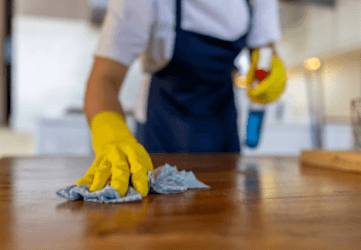
Daily (after every session): 1. Wipe down the entire mat surface with a microfibre cloth dampened with diluted enzyme gym spray (Lysol Disinfecting Sports Spray at Canadian Tire/IGA ~$6–8; or dilute 5 mL of dish soap in 500 mL warm water as a non-enzymatic alternative). 2. Allow to air-dry completely — at least 20–30 minutes — before rolling or stacking. Rolling a damp rubber mat traps moisture inside, creating ideal mould conditions within 48–72 hours in Montreal's July–August humidity.
Weekly: 1. Sweep or vacuum the underside of the mat to remove grit that scratches floor finishes. 2. Wipe the underside with a barely damp cloth. 3. If the mat has developed a mildewy smell, spray with a 50/50 solution of white vinegar and water. Leave flat in a ventilated area for 30 minutes, then wipe dry. Do not use bleach on rubber — chlorine degrades the rubber compound.
Pre-War Hardwood Floor Barrier Protocol
If you have original oil-finish hardwood floors (NDG/Plateau/Rosemont/HoMa triplexes): 1. Place a non-adhesive interlocking cork tile layer (6 mm) directly on the floor first. 2. Place the rubber or TPE mat on top of the cork layer. 3. Never leave a heavy vulcanized rubber mat in direct contact with an oil-finish hardwood floor for more than two weeks without lifting and inspecting the floor surface underneath. 4. If staining has already occurred, apply a small amount of cornstarch to the stain and let sit overnight. Brush clean. If stain persists, consult a hardwood floor refinisher — rubber plasticizer stains may require re-oiling or spot refinishing.
---
Dumbbells and Kettlebells
Rubber-Coated Dumbbells
Hex dumbbells and neoprene dumbbells (Canadian Tire, Decathlon, Amazon.ca): - After each session: wipe head and handle with enzyme spray or diluted dish soap on a microfibre cloth. - Monthly: check for calcium scale on the chrome or steel handle between the rubber heads. Wipe with undiluted white vinegar on a cloth, wait two minutes, wipe dry. - Do not submerge rubber-coated dumbbells in water — water infiltrates the rubber-to-metal bond and causes the rubber coating to delaminate over time.
Cast Iron / Steel Dumbbells and Kettlebells
Uncoated cast iron and steel equipment is the highest-maintenance category in a Montreal home gym: - After every session: wipe with a dry microfibre cloth. Remove all sweat — sweat salt (sodium chloride) combined with Montreal hard water mineral deposits accelerates surface rust dramatically. - Monthly: apply a very light coat of 3-In-One Multi-Purpose Oil or WD-40 Specialist Long-Term Corrosion Inhibitor to all bare steel surfaces using a lint-free cloth. Wipe off any excess. - October protocol: before the heating season lowers indoor RH to 20–30%, apply a thorough oil coat to all cast iron plates, barbell sleeves, and kettlebell handles. This barrier prevents six months of winter dry-air corrosion. - If rust appears: remove with a steel wire brush (Canadian Tire ~$5–8) or 400-grit wet-dry sandpaper, wipe clean, apply oil coat immediately.
---
Barbells and Weight Plates
Barbell Cleaning
1. After every session: wipe the knurling (textured grip sections) with a stiff-bristle brush (a medium toothbrush works) to remove chalk dust and debris packed into the pattern. Then wipe with a lightly damp cloth. 2. Monthly: apply 3-In-One oil or WD-40 Specialist to the sleeve bearings at each end of the barbell. Rotate the sleeve — it should spin smoothly. Stiff sleeves are a sign of calcium scale build-up from Montreal hard water. Flush with WD-40, wipe dry, re-apply 3-In-One. 3. Never submerge a barbell in water or leave it in a damp room. Moisture inside the barbell collects at the knurling channels and causes internal rust that eventually locks the bearings.
Weight Plates
- Cast iron plates: wipe after each session. Annual oil treatment same as kettlebells.
- Bumper plates (rubber-coated): wipe with enzyme spray. Check the centre steel insert for calcium scale and rust — treat with white vinegar + wipe dry.
- Fractional plates (steel or cast iron): small diameter means they often get overlooked. Include in monthly oil treatment.
---
Yoga Mats and Exercise Mats
TPE and natural rubber yoga mats (Manduka, Liforme, Lululemon, Amazon.ca brands):
After every session: 1. Lay the mat flat on the floor. Spray with diluted yoga mat cleaner (Manduka Mat Wash ~$18 on Amazon.ca; or 250 mL water + 5 drops tea tree essential oil + 5 drops lavender essential oil in a spray bottle for a DIY Montreal option available at Rachelle-Béry or Jean Coutu). 2. Wipe with a microfibre cloth. 3. Hang or lay flat to dry — never roll wet. In July–August, allow 45–60 minutes drying time before rolling.
Montreal summer mould warning: If your yoga mat develops black or green spots (mould), spray with 3% hydrogen peroxide (Pharmaprix/Jean Coutu ~$3/bottle), allow five-minute contact time, wipe clean, and dry completely. Do not use bleach — it degrades TPE and natural rubber.
Monthly deep clean: Fill a bathtub with 10 cm of cool water and 10 mL of dish soap. Submerge mat, agitate gently by hand, rinse thoroughly, hang to drip-dry. Do not machine wash. Do not put in dryer.
---
Treadmills and Cardio Machines
Treadmill Belt and Deck
1. After every session: wipe the belt top surface with a damp cloth and the side rails with a dry cloth to remove sweat. 2. Monthly: lubricate the belt-deck interface with silicone treadmill lubricant (Canadian Tire/Amazon.ca ~$8–12). Apply to the centre of the deck under the belt with the provided applicator. Run the belt at low speed for two minutes to distribute. Do not use WD-40 — it degrades the belt rubber compound. 3. Monthly: vacuum the motor area under the front cover with a crevice attachment to remove dust and lint. Montreal homes accumulate plaster dust (pre-war triplexes) and cottonwood fibre (May–June) that clog treadmill motor ventilation and cause overheating.
Stationary Bikes and Rowing Machines
- After every session: wipe the seat, handlebars, and any foam padding with enzyme spray.
- Monthly: check all bolts for tightness. Montreal temperature cycling (indoor air goes from 22°C summer to 19–20°C winter) causes minor expansion and contraction that loosens bolts over time.
- For bikes with chain drives: apply a drop of bicycle chain lubricant (Canadian Tire ~$8–10) to the chain monthly. Never use WD-40 on a bike chain — it displaces the existing lubricant and attracts grit.
---
Resistance Bands
Latex and TPE resistance bands: - Wipe after each session with a damp cloth. Do not use alcohol-based cleaners — isopropyl alcohol degrades latex within weeks. - Store away from direct sunlight. Montreal south-facing apartment windows expose bands to intense UV; UV degradation causes latex to crack and snap within three to six months. - Monthly: apply a light coat of talcum powder (Pharmaprix/Jean Coutu ~$4) to latex bands to prevent surface tackiness and extend latex life. - Replace immediately if cracks or tears appear — a snapping resistance band at full stretch causes serious injury.
---
Pull-Up Bars and Doorframe Bars
Doorframe pull-up bars (Canadian Tire ~$30–60): - Monthly: wipe the steel frame and foam grips with enzyme spray. Foam grip surfaces accumulate sweat salt and dead skin cells — the top surface microbial load source in home gyms. - Monthly: check the chrome or painted steel frame for calcium scale deposits from hard water near the grip zone where hands transfer moisture. Apply white vinegar with a cloth, wait two minutes, wipe dry. - Check the doorframe contact pads monthly for wear — cracked or compressed pads reduce grip friction and can cause bar displacement during use.
Wall-mounted pull-up bars: - Treat same as doorframe bars. Additionally: check anchor bolt torque annually. Montreal temperature cycling loosens lag bolts in wood stud walls over time.
---
DCC Condo Rules — What to Know
Many Montreal DCC condominium buildings in Griffintown, Square-Victoria, Plateau Mile-End, and Old Port have noise and vibration clauses in their règlement de copropriété. The following apply to home gym setups:
- Rubber isolation mat requirement: Jump training, drop sets, and heavy equipment placement above concrete slabs must use a minimum 10 mm rubber isolation mat to comply with most DCC regulations. The mat must cover the entire area of impact (not just under the equipment).
- Cardio equipment vibration: Treadmills and row ergometers transmit vibration through slab floors. A treadmill mat (minimum 6 mm rubber, preferably 10 mm) is required in most DCC buildings.
- Equipment listed on inventory: If your rental unit inventory at move-in included gym equipment (some furnished rentals), document its condition in writing. Dumbbell rack floor dents and rubber mat adhesive residue are TAL inspection items.
---
TAL Move-Out Context
If you are ending a lease and used a home gym in a Montreal rental unit:
- Rubber mat adhesive staining on hardwood: If a rubber mat was in direct contact with oil-finish or varnished hardwood for more than one month, inspect the floor underneath carefully. Yellowish or grey staining from rubber plasticizers is tenant liability under TAL — it is not normal wear. Document the floor condition before setting up any gym.
- Dumbbell scuff marks on LVP/laminate: Heavy dumbbells dropped or dragged across luxury vinyl plank (LVP) or laminate flooring leave permanent impressions. LVP and laminate are not repairable — damaged planks require full section replacement. Use rubber mats and never drop weights directly on LVP.
- Wall anchor damage: Wall-mounted pull-up bar anchor holes are tenant liability. Fill with paintable spackle (Canadian Tire/Home Depot ~$8), sand smooth, and apply matching paint before vacating.
- Normal wear: Minor rubber mat indentations on carpet, light dumbbell handle rust on concrete floors, and general sweat residue on walls at equipment height are normal wear in Quebec.
---
Seasonal Maintenance Calendar
| Month | Priority | |-------|----------| | May–June | Inspect for cottonwood fibre in treadmill motor vent; clean now before summer heat | | July–August | Daily mat wipe-down mandatory (mould risk in 5–7 days if damp); check foam padding for mould spots | | October | Apply oil coat to all bare steel/cast iron before heating season drops RH; tighten all bolts | | November–April | Monthly oil treatment; check for rust on steel handles; keep mat storage elevated off concrete basement floors if applicable |
---
Product Sourcing in Montreal
| Product | Where to Buy | Approximate Price | |---|---|---| | Enzyme gym spray (Lysol Sports) | Canadian Tire, IGA, Maxi, Jean Coutu | $6–8 | | Tea tree essential oil | Rachelle-Béry, Jean Coutu, Pharmaprix | $8–12 | | 3-In-One Multi-Purpose Oil | Canadian Tire, Home Depot | $6–8 | | WD-40 Specialist Long-Term Corrosion Inhibitor | Canadian Tire | $10–14 | | Silicone treadmill lubricant | Canadian Tire, Amazon.ca | $8–12 | | Bicycle chain lubricant | Canadian Tire, MEC | $8–10 | | 3% hydrogen peroxide | Pharmaprix, Jean Coutu | $3–5 | | Talcum powder (latex band care) | Pharmaprix, Jean Coutu | $4–6 | | Cornstarch (rubber stain treatment) | IGA, Maxi, Dollarama | $2–4 | | Cork tile mat underlay (6 mm) | Rona, Home Depot, IKEA | $20–40 | | Microfibre cloths | Canadian Tire, Costco, Dollarama | $5–12 | | Wire brush (rust removal) | Canadian Tire | $5–8 |
---
Frequently Asked Questions
Q: How often should I clean my home gym equipment in Montreal?
A: Wipe down rubber mats and equipment handles with enzyme spray after every session. In July and August, this is a mould-prevention necessity — sweat-saturated rubber surfaces in Montreal's 70–75% relative humidity develop Cladosporium mould within five to seven days if left damp. Monthly deep cleaning of steel and cast iron surfaces with a white vinegar mineral-scale treatment prevents calcium build-up from Montreal's hard 90–150 mg/L tap water. Annual oil treatment of all bare steel in October prepares equipment for the dry winter heating season.
Q: Can I put a rubber gym mat on my hardwood floor?
A: Not directly, if you have original oil-finish or varnished hardwood floors common in NDG, Plateau, Rosemont, HoMa, and Villeray pre-war triplexes. Vulcanized rubber mats contain plasticizers that migrate into the wood finish over weeks and cause permanent yellowish-grey staining. Use a 6 mm cork tile underlay between the floor and the rubber mat, and lift the mat monthly to inspect for staining. EVA foam puzzle mats are lower-risk but still leave adhesive film over time. Laminate and LVP floors are somewhat more forgiving but heavy rubber mats still compress the locking joints over months.
Q: What happens to resistance bands if I leave them near a window in my Montreal apartment?
A: Latex resistance bands degrade rapidly under UV exposure. Montreal's south-facing windows deliver intense summer UV, and a latex band stored in direct sunlight can crack and fail within three to six months. Store bands in a drawer or closet away from windows. TPE bands are more UV-resistant than latex but still best stored out of direct light. Replace any band immediately if you see surface cracks — a snapping band at full stretch causes serious injury.
Q: My dumbbells are developing rust. Is that normal in Montreal?
A: Surface rust on cast iron or uncoated steel dumbbells is common in Montreal homes. The cause is a combination of sweat salt, Montreal hard water mineral deposits, and the dramatic humidity swing between summer (70–75% RH) and the heating season (20–30% RH). Remove surface rust with a wire brush or 400-grit wet-dry sandpaper, wipe clean with a dry cloth, and apply a thin coat of 3-In-One oil immediately. An annual October oil coat before the heating season is the standard Montreal protocol for cast iron equipment.
Q: Do I need a special mat for my condo building?
A: Many Griffintown, Square-Victoria, Plateau Mile-End, and Old Port DCC condo buildings require rubber isolation mats under gym equipment to comply with noise and vibration rules in the règlement de copropriété. For cardio equipment (treadmills, rowing machines), use a minimum 6–10 mm rubber mat extending at least 30 cm beyond the machine's footprint. For free weights and jump training, a 10 mm rubber mat is standard. Check your DCC rules before setting up heavy equipment — syndicate noise complaints can result in fines.
Q: How do I get rid of the musty smell from my yoga mat?
A: A musty smell means mould or mildew has established in the mat surface or core. Spray the entire mat surface with undiluted 3% hydrogen peroxide (available at Pharmaprix and Jean Coutu for ~$3), allow five minutes of contact time, then wipe clean with a microfibre cloth. Lay flat in a ventilated room — ideally with a fan — for at least two hours before rolling. To prevent recurrence, never roll a damp mat: in Montreal's July–August humidity, allow 45–60 minutes of flat drying after every session. A spray bottle with 250 mL water and 5 drops tea tree oil used after every session inhibits mould growth naturally without degrading the mat material.

