

 *Photo: Unsplash*
Your bathroom sink is one of the most-used surfaces in the house — yet it rarely gets a dedicated cleaning. The toilet gets scrubbed, the mirror gets wiped, the shower gets rinsed. But the sink basin, the faucet spout, the handles, and the aerator tend to accumulate layers of mineral scale, soap scum, and grime that quick wiping never removes.
In Montreal, that problem is amplified. The city's municipal water supply carries 90–150 mg/L of calcium carbonate — moderately hard by Canadian standards, and enough to leave a white mineral film on every surface it touches. Over weeks and months, that film calcifies into a cement-like crust on faucet handles, builds up inside aerator mesh, and bonds with bar soap residue to create stubborn soap scum that standard cleaners barely dent.
This guide covers every surface: the basin itself, the faucet and spout, the handles, the aerator, and the pop-up drain stopper. It distinguishes between the three main sink types in Montreal's housing stock and three main faucet finishes, because each requires a different approach.
Why Montreal Sinks Get Dirtier Faster
Montreal's water hardness sits at 90–150 mg/L CaCO₃. When tap water evaporates on a surface, the dissolved calcium carbonate is left behind as a white mineral residue. It happens every time you wash your hands, rinse toothpaste, or splash the basin.
The second factor is soap. Quebec households — particularly francophone ones — use bar soap at significantly higher rates than liquid pump soap. Bar soap leaves fatty acid calcium salts on the basin: a greasy, yellowish film that bonds chemically with calcium from the water. This soap scum has both a grease component (requiring a degreaser) and a mineral component (requiring an acid), making it harder to remove than straight mineral scale.
Third, Montreal's pre-war plumbing contributes iron. Triplexes in NDG, Plateau-Mont-Royal, Rosemont, Hochelaga-Maisonneuve, and Villeray — built between the 1890s and the 1950s — still have original galvanized steel supply lines that corrode internally. The iron oxide particles that migrate into the water supply deposit as orange-brown stains around the drain and at the standing-water mark.
Know Your Sink Type
Montreal's housing stock contains three dominant sink types, and each requires a distinct cleaning approach.
1. Porcelain pedestal sinks (pre-war triplexes, 1890s–1950s)
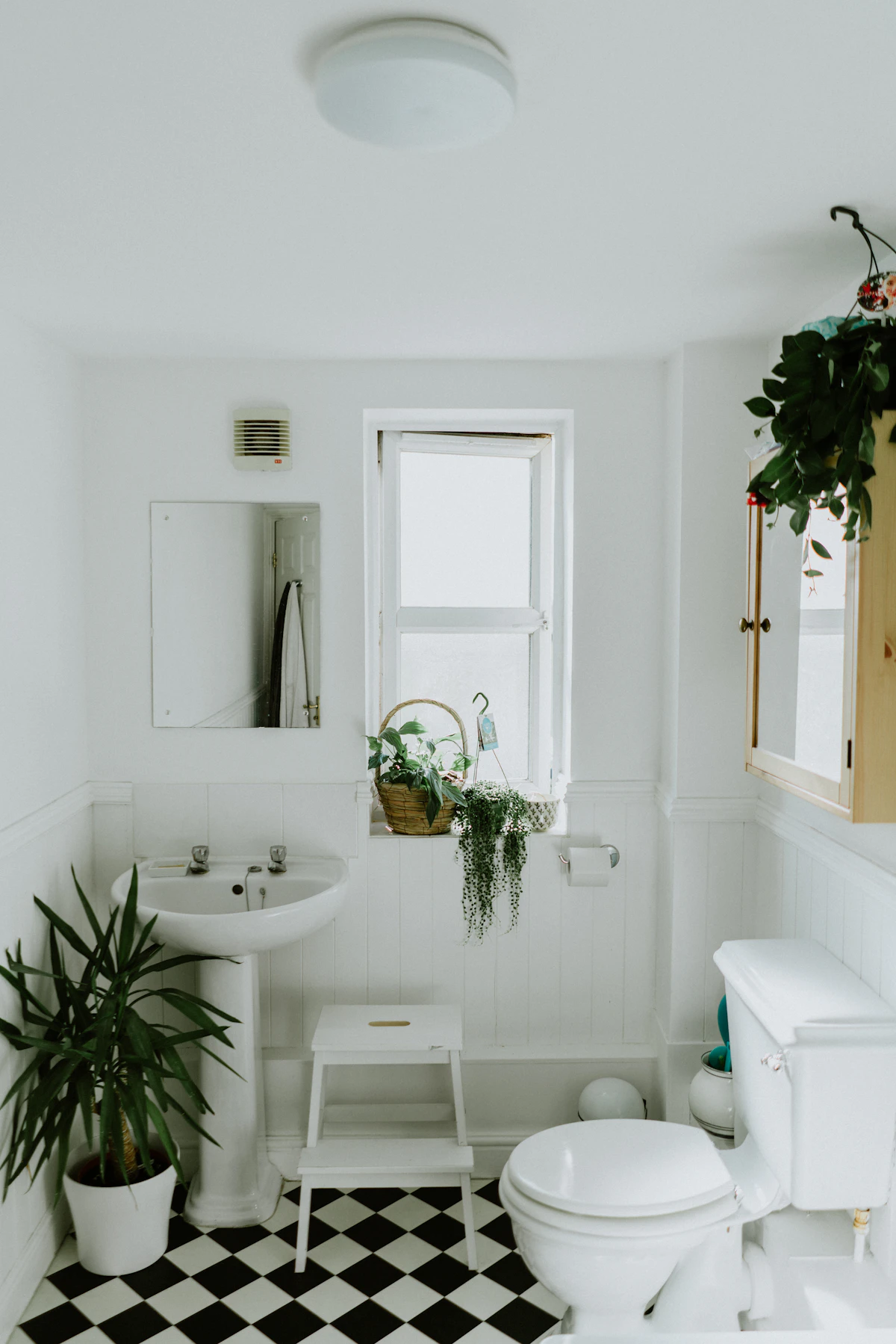
The most common sink in NDG, Plateau, Rosemont, HoMa, and Villeray rental apartments. Vitreous china with a glossy fired surface — durable but not impervious to strong acids left too long. Safe cleaners: white vinegar, Bar Keepers Friend (oxalic acid powder), mild dish soap. Avoid abrasive scrubbing pads that scratch the glaze, creating micro-grooves where bacteria accumulate.
2. Ceramic under-mount or drop-in sinks (1960s–1990s rental stock)
Found in most Côte-des-Neiges, Ahuntsic, Saint-Laurent, and Villeray apartment renovations from the postwar era. Similar composition to porcelain. The joint between sink and vanity top collects mold in Montreal's 70–75% summer humidity; the silicone caulk at that joint should be inspected and replaced every 3–5 years.
3. Composite resin sinks (post-2000 renovations)
Increasingly common in Griffintown, Mile-Ex, and CDN condo renovations. White or beige composite materials (granite resin, quartz composite, or acrylic solid surface). More porous than vitreous china — absorb staining more readily. Require pH-neutral cleaners only: no bleach, no full-strength vinegar (can etch the resin surface), no abrasive pads. Gentle dish soap and warm water, weekly, is the correct maintenance protocol.
Tools and Supplies
- White vinegar (4L jug, IGA/Maxi/Metro ~$3–5)
- Bar Keepers Friend powder (~$4–6, Canadian Tire or Home Depot)
- CLR Calcium Lime Rust (~$8–12, Canadian Tire/Home Depot/Rona)
- Adjustable wrench or slip-joint pliers
- Old toothbrush
- Microfibre cloths (avoid paper towels on chrome — leave lint)
- Non-scratch sponge (green Scotch-Brite on vitreous china; soft side only on resin)
- Small bowl for soaking aerator components
- Dish soap (Dawn or Sunlight, IGA/Maxi/Dollarama)
Step 1: Clean the Basin
For porcelain and ceramic basins:
Rinse the basin with warm water to loosen debris. Sprinkle Bar Keepers Friend powder on the wet surface and let it sit for 2–3 minutes — enough for the oxalic acid to dissolve calcium deposits and soap scum simultaneously. Scrub with a non-scratch sponge using circular motions. Rinse thoroughly.
For stubborn mineral rings around the drain, soak a paper towel in undiluted white vinegar, lay it over the stain, and leave for 20–30 minutes before scrubbing.
For composite resin basins:
Use warm water and a small amount of dish soap only. For mineral deposits: dilute white vinegar 1:3 with water (never full strength on resin) and apply with a cloth for 10 minutes maximum. Rinse immediately. Do not use Bar Keepers Friend on composite resin — the abrasive grit scratches the surface.
For iron stains (orange-brown rings):
Apply Bar Keepers Friend as a wet paste, leave for 5 minutes, scrub gently. For severe embedded iron staining, CLR works in 2 minutes — read the bottle and rinse before the time limit. Never use bleach: chlorine oxidizes iron stains and bonds them permanently to porcelain.
Step 2: Clean the Faucet and Handles
Chrome faucets (most common in Montreal apartments pre-2010):
Chrome is hard and resists scratches, but it reacts to prolonged acid contact. Apply Bar Keepers Friend paste with a damp cloth, rub the calcium spots for 1–2 minutes maximum, then rinse immediately. White vinegar is also effective: dampen a cloth and wrap it around the faucet neck for 15–20 minutes.
For mineral deposits at the base of the faucet where it meets the sink deck, use an old toothbrush with BKF paste along the gap.
Brushed nickel faucets (common in post-2010 renovations):
The most delicate common finish. Never use Bar Keepers Friend, CLR, or undiluted vinegar — all will strip or pit the brushed texture. Clean only with warm water and dish soap applied with a soft cloth. For deposits, soak a cloth in 1:4 vinegar-water solution (very diluted) and hold it against the deposit for 5 minutes maximum. Dry thoroughly after cleaning.
Brass faucets (heritage Westmount/Outremont/TMR homes):
Unlacquered brass responds well to lemon juice with a pinch of salt: rub in, leave 5 minutes, rinse, dry. Lacquered brass should be treated like brushed nickel — gentle soap only, as lacquer dissolves under acids.
Step 3: Clean the Faucet Aerator
The aerator is the small screen fitting at the tip of the spout. In Montreal, hard water clogs it within 12–18 months, reducing water pressure to a thin trickle. Cleaning takes 10 minutes and costs nothing.
1. Wrap the aerator housing with a thin cloth (to protect the finish) and unscrew counterclockwise with your fingers or slip-joint pliers. Most aerators unscrew by hand once you break the initial resistance. 2. Note the order of components as you disassemble: housing, screen(s), flow restrictor, and washer. Keep them in order on the counter. 3. Soak all components in a small bowl of undiluted white vinegar for 30–60 minutes. The calcium deposits will fizz and dissolve. 4. Use an old toothbrush to clean the screen mesh under running water. Hold it up to the light — all holes should be clear. 5. Reassemble in the original order and screw back on. Turn water to full pressure and check the flow.
If the aerator has been neglected for several years and the screen mesh has corroded or collapsed, replacements cost $3–8 at Canadian Tire or Home Depot and come in standard thread sizes.
Step 4: Clean the Pop-Up Drain Stopper
This is the piece most people ignore — and the source of most bathroom sink odours.
Modern quick-snap stoppers (most post-2000 sinks):
These lift straight out — twist counterclockwise slightly and pull up. Bring them to the other sink for cleaning: remove the hair and soap accumulation, rinse with warm water and dish soap, then reinstall.
Pre-war brass pivot-rod stoppers (1890s–1950s triplexes):
The classic pre-war bathroom sink has a stopper connected to a pivot rod that runs through the drainpipe, operated by a lift rod behind the faucet. To remove: reach under the sink, locate the pivot rod where it enters the P-trap drain stub, and unscrew the retaining nut by hand or with pliers. The pivot rod and stopper slide out together.
Clean all accumulated hair and soap from both pieces. Soak in white vinegar for 15 minutes to remove mineral scale. Rinse and reinstall. This type benefits from monthly cleaning — the pivot rod mechanism creates a ledge where hair catches faster than in quick-snap designs.
Step 5: Prevention
A few habits prevent most of the buildup that makes deep cleaning difficult:
- Wipe the basin after brushing teeth or shaving. 30 seconds removes water before it evaporates and deposits minerals.
- Switch to liquid hand soap. Liquid soap doesn't form fatty-acid calcium salt deposits the way bar soap does.
- Weekly vinegar spray. Mix 1:3 vinegar-water in a spray bottle, spray the basin and faucet, wipe clean. Prevents calcium from bonding to the surface.
- Clean the aerator once per year. Mark it on a calendar — October is a natural Montreal reminder date before the dry heating season starts.
- Dry the faucet after use. Hard water leaves spots on chrome within minutes of drying.
Montreal Product Sources
| Product | Where to buy | Price (approx.) | |---|---|---| | Bar Keepers Friend powder | Canadian Tire, Home Depot, IGA | $4–6 | | CLR Calcium Lime Rust | Canadian Tire, Home Depot, Rona | $8–12 | | White vinegar 4L | IGA, Maxi, Metro, Dollarama | $3–5 | | Citric acid powder | Jean Coutu, Pharmaprix, Bulk Barn | $5–8 | | Faucet aerator replacement | Canadian Tire, Home Depot | $3–8 | | Microfibre cloths | Canadian Tire, IKEA, Dollarama | $5–12 |
FAQ
Q: How do I remove the white scale around my bathroom faucet base?
A: Soak a cloth in undiluted white vinegar, wrap it around the faucet base, and leave for 20–30 minutes. The calcium carbonate will dissolve. For severe buildup, apply Bar Keepers Friend paste with an old toothbrush, leave for 2 minutes, and rinse. Never use steel wool or abrasive pads — they scratch chrome and porcelain permanently.
Q: My bathroom faucet has very low water pressure. What should I check first?
A: The aerator. In Montreal's hard water, the aerator screen clogs with calcium deposits within 12–18 months. Unscrew the aerator (counterclockwise by hand or with pliers), soak the components in white vinegar for 30–60 minutes, rinse, and reinstall. Flow should return to full pressure immediately. Replacement aerators cost $3–8 at Canadian Tire if the mesh has corroded beyond cleaning.
Q: Can I use the same cleaner on my chrome faucet and my white resin sink?
A: No. Chrome tolerates Bar Keepers Friend (oxalic acid) for up to 2 minutes and diluted vinegar well. Composite resin sinks require pH-neutral cleaners only — Bar Keepers Friend is too abrasive for resin, and full-strength vinegar can etch the surface. Use dish soap on the resin basin and BKF only on the chrome faucet.
Q: There's an orange-brown ring around my drain. Is that rust from the pipes?
A: Likely yes. In Montreal's pre-war triplexes, galvanized steel supply pipes corrode internally and introduce iron oxide into the water. The iron co-precipitates with calcium and deposits as orange-brown staining at the waterline and around the drain. Treatment: Bar Keepers Friend paste (leave 5 minutes, scrub, rinse), or CLR (2 minutes maximum, rinse immediately). Never use bleach — it permanently bonds rust to porcelain.
Q: My sink smells even after cleaning the basin. What's causing it?
A: The pop-up stopper assembly. Hair, soap, and mineral scale accumulate on the stopper and pivot rod, providing a base for odour-producing bacteria. Remove and clean the stopper and pivot rod: soak in white vinegar for 15 minutes, scrub with an old toothbrush, and reinstall. Also pour 250 mL of baking soda down the drain followed by 250 mL of white vinegar, let fizz for 10 minutes, then flush with boiling water to clear P-trap biofilm.
Q: Who is responsible for the bathroom sink in a Montreal rental — tenant or landlord?
A: The tenant is responsible for regular cleaning and maintenance of the sink basin, faucet, and drain stopper — routine housekeeping tasks. If mineral staining is caused by iron in the building's supply water from corroding galvanized pipes, that is a habitability issue under TAL CCQ Art. 1854 and becomes the landlord's responsibility to resolve (pipe replacement). Document iron-stained water with dated photos and a written notice to your landlord if the staining is severe or recurrent.

