

 *Photo: Unsplash*
Bird cages require more frequent cleaning than almost any other pet enclosure — droppings dry within hours in warm Montreal air, feather dust accumulates on every nearby surface, and uneaten fresh food spoils rapidly in the city's humid July–August climate. Whether you keep a budgie in a Rosemont triplex, a cockatiel in a Plateau condo, or an African grey in a Westmount home, this guide provides the complete cleaning protocol: daily liner changes, weekly bar scrubbing, monthly disinfection, and the specific considerations for pre-war Montreal apartment dwellers.
Why Cleaning Your Bird Cage Matters
Dirty cages are the primary source of avian respiratory infections, fungal disease (Aspergillosis), and intestinal parasites in companion birds. Psittacosis (Chlamydophila psittaci) — a bacterial infection transmissible to humans — survives in dried droppings for weeks and can be inhaled during cleaning if no dust mask is worn. Birds have highly efficient respiratory systems optimized for sustained flight; this makes them far more sensitive to airborne pathogens and chemical fumes than mammals. A cage cleaned once a week with an unsafe disinfectant is more dangerous than a cage cleaned daily with plain white vinegar.
In Montreal's pre-war triplex apartments, feather dust — especially the fine powder down produced by cockatiels, African grey parrots, and cockatoos — settles into the 2–4 mm gaps between hardwood floor planks and circulates through the forced-air heating system. In a shared 600–900 sq ft NDG or Plateau apartment, what affects the bird's cage affects the household's air quality. An air purifier with a True HEPA filter (H13 grade) placed within 2 metres of the cage captures most feather dust particles. See the guide on [cleaning and replacing your air purifier filter](/en/blog/how-to-clean-an-air-purifier-filter-montreal) for the monthly maintenance protocol — filters clogged with feather dust lose efficiency rapidly.
How Often to Clean a Bird Cage
The cleaning schedule depends on your bird's size and species:
Small birds (budgies, lovebirds, parrotlets): Daily liner change and dish cleaning; weekly full bar scrub; monthly disinfection.
Medium birds (cockatiels, conures, caiques, Senegals, smaller Amazons): Daily liner change plus spot-wiping bar droppings; weekly full scrub; monthly disinfection.
Large birds (African greys, cockatoos, macaws, large Amazons): Daily liner change plus full bar wipe-down; weekly deep-clean with perch rotation; monthly disinfection with F10SC or dilute bleach.
In July and August, Montreal's outdoor relative humidity regularly reaches 70–80% — unventilated pre-war apartments without central air conditioning amplify this indoors. At 70%+ RH, wet paper liners and dishes containing fruits or vegetables become a mould substrate within 12–24 hours. Increase liner changes to twice daily during summer heat waves and remove all uneaten soft food — fruit, vegetables, cooked egg food — within 4 hours during hot spells.
Daily Cleaning Routine
Step 1: Change the cage liner. Remove the bottom tray and slide out the liner or newspaper. Fold it inward to contain droppings and feather dust, then dispose of it in the regular garbage bin (grey or black bin — bird droppings are animal material and do NOT go in the green compost bin according to Ville de Montréal waste-sorting rules). Replace with a fresh sheet of cage paper or newspaper. The Journal de Montréal works well as liner paper; avoid pages with freshly printed ink, as some inks contain zinc compounds that are toxic to birds if ingested from bar contact.
Step 2: Clean food and water dishes. Remove all dishes, rinse with hot water, wash with fragrance-free dish soap, rinse thoroughly, and dry completely before refilling. A wet dish refilled with seed or pellets becomes a bacterial culture medium within hours in Montreal summer humidity.
Step 3: Spot-clean bar droppings. Use a damp cloth or unscented baby wipe to wipe dried droppings from the bars and perch spots your bird uses most frequently. Droppings not removed daily harden into a thick crust that requires soaking to remove during the weekly clean.
Weekly Full Cage Scrub
Move your bird to a travel cage or safe perch outside the main cage during the weekly clean.
Step 1: Remove everything. Take out perches, toys, food dishes, the water dish, the grate, and the bottom tray. Place them in the bathtub or laundry sink.
Step 2: Soak encrusted droppings. Fill the tub with hot water and let perches, the grate, and the tray soak for 15–20 minutes. Dried droppings that were missed during daily spot-cleaning will loosen and can be scrubbed off with a stiff nylon cage brush. Never use metal bristle brushes on galvanized or powder-coated cage wire — metal scrubbing can dislodge zinc particles that contaminate perches and cause heavy metal poisoning when birds chew on the bars.
Step 3: Scrub the cage bars. Use a bird-safe cleaning solution (white vinegar 1:1 or fragrance-free dish soap) and a long-handled bottle brush to scrub all bars and the cage frame. Pay extra attention to corner joints and horizontal bars where droppings accumulate in layers.
Step 4: Clean perches. Natural wood perches accumulate bacteria in the bark surface. Scrub vigorously with a stiff brush under running hot water. Rotate perches — retire the dirtiest ones and introduce fresh natural wood perches. Safe wood species found in Montreal parks include apple, willow, hawthorn, and silver maple — cut before leaf emergence and check that no pesticide has been applied to the tree.
Step 5: Rinse completely. All cage components, bars, perches, and dishes must be rinsed with clean water until no soap or cleaning solution residue remains. Even fragrance-free dish soap residue can irritate sensitive avian airways. Rinse a second time to be certain.
Step 6: Dry thoroughly before reassembling. In Montreal's July–August humid climate, air-drying takes 2–4 hours instead of 30–60 minutes in winter. Use clean towels to speed-dry the cage frame and tray. A wet cage reassembled while still damp creates condensation inside that promotes bacterial and mould growth within 24–48 hours.
Monthly Disinfection
Monthly full disinfection eliminates Aspergillus spores, psittacosis bacteria, and viral particles that weekly dish-soap cleaning does not reliably destroy.
Safe disinfectants for bird cages:
White vinegar diluted 1:1 with water is the most practical everyday disinfectant for most Montreal bird owners. It is effective against most bacteria and some mould spores, is non-toxic once dry, and rinses cleanly without chemical residue. Available at IGA, Maxi, or Metro for $3–5 per 4L jug.
Dilute bleach (1:32 with water) — approximately 15 mL of regular household bleach per 500 mL of water — is effective against Aspergillus, bacteria, and most viruses. It must be rinsed extremely thoroughly — a minimum of three full rinse cycles — and allowed to air-dry completely before any bird contact. Use only unscented regular household bleach at 4–6% sodium hypochlorite. Available at Canadian Tire or any Montreal grocery store for under $5.
F10SC Veterinary Disinfectant is a hospital-grade quaternary ammonium disinfectant specifically approved for use around birds. At a 1:500 dilution (2 mL per 1,000 mL water), it kills a broad spectrum of pathogens with no toxicity to birds once dry. Available at avian veterinary clinics in Montreal and on Amazon.ca for approximately $25–35 per 200 mL concentrate. F10SC is the gold standard for households with large psittacines or multiple birds.
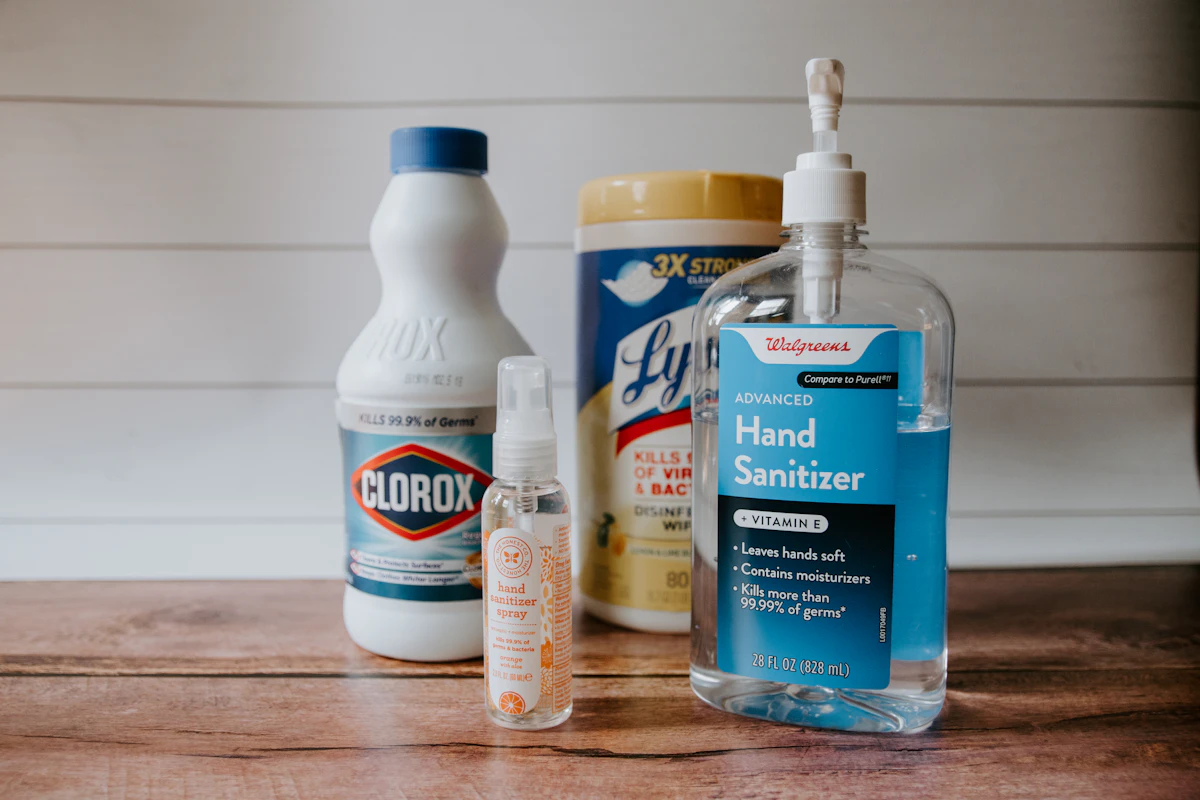
What never to use on a bird cage: Pinesol, Lysol, Mr. Clean, Vim, products containing tea tree oil or eucalyptus oil, or any scented multi-surface disinfectant spray. These all contain phenol compounds, quaternary ammonium at high concentrations, or volatile essential oils that are acutely toxic to birds at normal household dilutions. Birds are approximately 40 times more sensitive to airborne chemicals than humans due to their air-sac respiratory anatomy — even residue from these products on a perch can cause respiratory distress or death within hours.
Feather Dust and Montreal Pre-War Apartments
Cockatiels, African grey parrots, cockatoos, and related species produce a continuous fine powder from specialized feather structures that disintegrate into microscopic keratin particles. This powder down coats every nearby surface in a fine grey-white film and circulates freely through heated or air-conditioned spaces.
In a pre-war NDG, Plateau-Mont-Royal, or Rosemont triplex with 2–4 mm gaps between hardwood floor planks and electric baseboard or forced-air heating, feather dust accumulates in the gap channels and inside heat registers. Cleaning these surfaces is part of a bird owner's routine alongside the cage clean itself. A True HEPA air purifier (H13 class) captures particles as small as 0.1 microns — well below the 1–10 micron size of most powder-down particles. Clean or replace the HEPA filter monthly; a clogged filter re-circulates captured dust rather than trapping it. See the full protocol in the [air purifier filter cleaning guide](/en/blog/how-to-clean-an-air-purifier-filter-montreal).
Compared to other pet-related cleaning challenges, feather dust is uniquely persistent. Unlike the cat hair and dander covered in the [pet hair and odour removal guide](/en/blog/how-to-remove-pet-hair-and-odour-montreal-apartment), feather powder is fine enough to penetrate most vacuum HEPA pre-filters and cling electrostatically to painted walls. A microfibre electrostatic duster on walls adjacent to the cage should be part of the weekly routine.
TAL Rental Context for Montreal Bird Owners
Quebec Bill 16 (2019) removed the ability for landlords to include blanket no-pet clauses in standard residential leases. Since then, birds in Montreal rental apartments have become significantly more common — particularly in the dense pre-war triplex neighbourhoods of NDG, Plateau, Rosemont, HoMa, and Villeray. At the Tribunal administratif du logement (TAL), bird droppings that stain hardwood floors, walls, or window sills are claimable landlord damage at move-out, similar to pet urine stains (covered in the [pet urine smell removal guide](/en/blog/how-to-remove-pet-urine-smell-montreal)).
A magnetic or acrylic cage skirt catches droppings and feathers before they contact the floor. Clean the skirt weekly with a damp cloth and replace it when it becomes saturated. Document the floor condition under and around the cage at the start of your tenancy with timestamped photos, and retain those photos until the end of your lease.
Where to Buy Bird Cage Cleaning Supplies in Montreal
Mondou (20+ Montreal locations): cage paper liners, bird-safe cleaning sprays (Poop-Off, Prevue Pet Cage Cleaner), perch cleaning brushes, natural wood perches, replacement food dishes, and spare cage trays for Prevue Pet and Hagen Vision cages.
PetSmart (Anjou, Laval, Brossard, DDO): comprehensive bird section including Avi-Safe cage cleaner, nylon cage-bar brushes, and a full range of Prevue Hendryx cage accessories.
Dollarama (all Montreal boroughs): unprinted kraft or newsprint paper for cage liners; dish brushes for grates and dishes; white vinegar in small bottles; small spray bottles for diluting cleaning solutions.
Canadian Tire: white vinegar 4L ($3–5); unscented household bleach; long-handled bottle brushes and grate scrubbers; large plastic bins for soaking the bottom grate during weekly cleaning.
For professional home cleaning services in Montreal that work around your birds and use bird-safe, low-VOC products, see [deep cleaning services](/en/services/deep-cleaning) or [recurring home cleaning](/en/services/home-cleaning). A bi-weekly or monthly home clean helps manage feather dust accumulation on shelves, window sills, and baseboards — surfaces that require more attention in bird-owning households than in pet-free ones.
Frequently Asked Questions
Q: How often should I clean my bird cage?
A: The cage liner and all food and water dishes should be cleaned or changed every day — fresh droppings carry fewer pathogens than dried, encrusted droppings, and uneaten food spoils rapidly in Montreal's summer humidity. The full cage scrub (bars, perches, grate, tray) should happen every week. A monthly full disinfection with dilute bleach (1:32), white vinegar (1:1), or F10SC veterinary disinfectant kills mould spores and bacterial colonies that weekly soap cleaning cannot reliably destroy. Larger birds produce significantly more waste and may require daily bar wiping in addition to the daily liner change.
Q: Is white vinegar safe to clean a bird cage?
A: Yes — diluted 1:1 with water, white vinegar is one of the safest cleaning agents for bird cages. It is effective against most bacteria and some mould spores, is non-toxic once completely dry, and rinses cleanly without chemical residue. Let the cage air-dry or wipe it dry with a clean cloth before returning your bird to the cage. The acetic acid smell dissipates completely within 10–15 minutes of drying. Avoid applying vinegar to cage bars while your bird is inside, as the brief fumes during application can irritate sensitive avian airways even at low concentrations.
Q: Can I use Lysol or Pinesol to clean a bird cage?
A: No — these products are acutely toxic to birds and must never be used on cages, perches, or any surface a bird contacts. Quaternary ammonium compounds (Lysol, most multi-surface disinfecting sprays) and phenol-based cleaners (Pinesol, Dettol) are all highly toxic to birds at normal household concentrations. Birds are approximately 40 times more sensitive to airborne chemicals than humans due to their air-sac respiratory anatomy. Even dried residue from these products on a perch can cause respiratory distress or sudden death. Safe alternatives are dilute bleach (1:32, rinsed thoroughly with 3 rinse cycles and completely dry before bird contact), white vinegar (1:1), or F10SC veterinary disinfectant.
Q: How do I remove hardened dried bird droppings from cage bars?
A: Soak the affected bars or removable cage components in warm water for 15–20 minutes — this softens the uric acid crystals in dried droppings without requiring harsh chemical cleaners. A stiff nylon bottle brush or dedicated cage-bar brush (sold at Mondou and PetSmart) with fragrance-free dish soap will then remove the softened residue. For heavily grooved or encrusted areas, a toothbrush reaches into wire joints effectively. Never use metal bristle brushes or abrasive scrubbing pads on galvanized or powder-coated cage wire — abrasion exposes the underlying metal, which may contain zinc that causes heavy metal poisoning if birds chew the affected bars.
Q: My bird cage has a persistent smell even after cleaning — what should I do?
A: Persistent odour after cleaning indicates bacterial colonies embedded in porous materials — natural wood perches with deep cracks, rope toys or wicker toys that have absorbed droppings, or a plastic cage tray that has developed scratches. Retire all heavily soiled rope and wicker toys immediately — they cannot be fully disinfected once saturated. Replace natural wood perches with visible cracks or dark discoloration. Scrub the plastic cage tray with white vinegar (1:1) and allow it to soak for 20–30 minutes; if the tray surface is deeply scratched through the plastic, bacteria grow in the scratches permanently and the tray should be replaced (available at Mondou for $15–25 for compatible Prevue Pet and Hagen Vision spare trays). Monthly disinfection with F10SC or dilute bleach eliminates residual bacterial odour sources.
Q: Is it safe to clean a bird cage in the bathtub?
A: Yes — soaking cage components in the bathtub is the standard method for weekly deep-cleaning and is safe for your plumbing. Rinse the tub thoroughly with hot water after cleaning to remove all droppings and cleaning product residue. If your bird is a large psittacine (African grey, cockatoo, macaw) and you have any concern about Chlamydophila psittaci (psittacosis), wear a disposable N95 mask and rubber gloves during cleaning and ventilate the bathroom with the exhaust fan running. Bird droppings should not contact open wounds; wash hands thoroughly with soap after handling soiled cage components even when wearing gloves. For similar small-animal cleaning protocols, see the [hamster and guinea pig cage guide](/en/blog/how-to-clean-a-hamster-cage-and-guinea-pig-cage-montreal) and the [fish tank maintenance guide](/en/blog/how-to-clean-a-fish-tank-montreal).

