
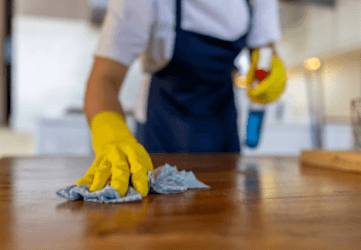
 *Photo: Unsplash*
Montreal's exterior windows face a harder cleaning challenge than in most Canadian cities. The combination of hard water (90–150 mg/L calcium from the St. Lawrence watershed), urban diesel particulate from busy arterials, cottonwood fibre in May and June, and a 7-month winter that leaves CaCl₂ road salt residue on every ground-floor surface means exterior glass accumulates a multi-layer film that interior cleaning will never reach. Most Montrealers clean their interior windows and wonder why the view still looks hazy — the problem is outside.
This guide covers everything you need to clean exterior windows yourself: the right tools, Montreal-specific pre-treatment steps for calcium and grease, correct squeegee technique for both ground-floor and upper-floor windows, and a seasonal cleaning calendar. It also covers the realistic limits of DIY — when a telescoping pole solves the problem and when a professional window cleaner is genuinely necessary for safety.
Why Montreal Exterior Windows Are Harder to Clean Than Most Cities
Hard water calcium film. Montreal's municipal water supply draws from the St. Lawrence River and typically registers 90–150 mg/L of dissolved calcium carbonate (CaCO₃). Every rain shower deposits calcium on exterior glass as the water evaporates. Over a Montreal summer, this builds into a white haze that standard window spray will not dissolve — it requires an acid (white vinegar or citric acid) to break the calcium-to-glass bond before the squeegee can work effectively.
Urban diesel and brake dust grease. Montreal streets — especially Rue Sherbrooke, Boulevard Saint-Laurent, Rue Saint-Denis, and access roads to A-20, A-25, and A-40 — generate diesel exhaust particles and brake dust that deposit a fine greasy film on south- and west-facing windows. Squeegeeing over an undegreased surface smears the grease and creates new streaks. A dish-soap pre-wash must come before the squeegee pass, not after.
Cottonwood fibre (mid-May to mid-June). The peuplier du Canada (cottonwood poplar) releases white fibrous fluff for 2–3 weeks every spring across Montreal. The fibres are sticky when wet and lodge firmly in squeegee rubber blades and between the blade and glass. Dry-brush exterior window frames and sills before any wet cleaning during cottonwood season — adding water first embeds the fibres deeper and prevents them from being removed cleanly.
CaCl₂ road salt splash (November–April). Ground-floor and basement windows on Montreal triplexes and bungalows sit in the splash zone for winter road salt. The lower 60 cm of an exterior pane can develop a heavy white calcium chloride film after a single heavy snowplow pass. White vinegar diluted 1:1 with water dissolves CaCl₂ within 60–90 seconds of contact.
Tools You'll Need
| Tool | Price | Montreal retailer | |---|---|---| | Ettore-style squeegee (25–35 cm blade) | $15–30 | Canadian Tire / Home Depot | | Telescoping extension pole (1.5–4.5 m) | $20–40 | Canadian Tire / Home Depot | | Squeegee bucket (8–10 L) | $8–12 | Canadian Tire / Dollarama | | Microfibre chamois or window cloth | $5–10 | Canadian Tire / Dollarama | | White vinegar (4 L) | $3–5 | IGA / Maxi / Dollarama | | Citric acid powder | $5–8 | Jean Coutu / bulk food stores | | Dish soap (Dawn or Palmolive) | $3–5 | IGA / Metro | | Spray bottle | $2–4 | Dollarama | | Stiff-bristle dry scrub brush | $5–10 | Canadian Tire |
Optional: Windex Outdoor Ready-To-Use (IGA/Maxi ~$8–12) — a pre-mixed outdoor window spray that attaches directly to a garden hose. Convenient for a quick ground-floor rinse-and-clean, but not a substitute for the full degreasing and calcium-removal protocol below on heavily soiled windows.
Step-by-Step Protocol: Ground-Floor and Accessible Windows
Ground-floor windows on Montreal triplexes, bungalows, and townhouses are accessible by hand without a ladder. This is the safest and most effective approach.
Step 1 — Cottonwood dry pre-brush (mid-May to mid-June only) If it is cottonwood season, dry-brush the exterior frame, sill, and the window glass surface with a stiff bristle brush before applying any water. White fibres visible on the glass must be loosened and swept away dry. Wetting cottonwood fibres first causes them to mat flat against the glass and embed in the squeegee rubber blade, producing streaks across the entire pane.
Step 2 — Calcium pre-treatment Mix equal parts white vinegar and water in a spray bottle. Spray the entire glass surface and let it sit for 60–90 seconds. For heavy calcium build-up — common after a full Montreal winter — dissolve 2 teaspoons of citric acid powder in 500 mL of warm water and use that instead. Citric acid forms a stronger calcium chelate than acetic acid and dissolves deposits that white vinegar alone cannot lift, with no residual odour. On heavily calcified glass, you may see faint fizzing as the acid reacts with calcium carbonate — that confirms the reaction is working.
Step 3 — Degreasing pre-wash Add 1–2 drops of dish soap to a bucket of warm water. Wash the window surface thoroughly with a soft sponge or the applicator side of a combination window washer. Dish soap breaks the greasy film from diesel exhaust and brake dust that the acid spray cannot dissolve. Rinse with clean water from a spray bottle or light hose spray before the soapy water dries on the glass.
Step 4 — Squeegee pass Two techniques work: the straight-stroke method (top-to-bottom vertical parallel strips, wiping the blade dry on a chamois between each pass) and the S-stroke method (a continuous snake-wave pattern that covers the pane without lifting the blade). Both produce excellent results when the glass is properly pre-treated. Use the straight-stroke method when learning — it is easier to control and correct. Key rules for both: always start at the top edge; overlap each strip by 2–3 cm to avoid a dry gap; maintain consistent even blade pressure across the full width (do not press harder at the edges); wipe the rubber blade dry after every single pass.
Step 5 — Edge detailing After the squeegee, a thin bead of water remains along the window frame at all four edges. Use a folded dry microfibre chamois or window cloth to wipe the bottom edge, both vertical edges, and any pooled drops at the corners. Skipping this step leaves the water to dry into streak lines at the frame border — the most visible flaw from outside.
Upper-Floor Windows: Telescoping Extension Pole
Second and third floor windows on Montreal triplexes are accessible from the ground using a telescoping extension pole (available at Canadian Tire in 1.5 m, 3 m, and 4.5 m sections that lock together; full 4.5 m extension reaches a typical third-floor window on a Montreal triplex with normal 9-foot floor-to-ceiling heights). Attach a professional squeegee head to the pole's universal swivel fitting.
Working at height from the ground changes the technique: use the straight-stroke method only — the S-stroke requires wrist control that is difficult to execute accurately on a 4-metre pole. Work in 4–6 vertical strips across the pane, apply the vinegar or citric acid pre-treatment with a long-handled applicator or a pole-mounted spray bottle before starting, and plan the degreasing pre-wash with a long-handled sponge applicator.
Edge detailing with a pole is difficult — accept that the very edges may need a hand-wipe with a chamois from a stable, low step stool if you can reach the bottom frame of a second-floor window from the balcony or a ground-level position.
Safety note: Never use a ladder on Montreal's exterior metal spiral staircases, on uneven cobblestone surfaces, or on sloped stone entry stairs. Use a ground-based telescoping pole whenever the window is reachable from grade.
High-Rise Condos: Know the Limits of DIY
Griffintown, Downtown, Côte-des-Neiges, Square-Victoria, Old Port, and Île-des-Sœurs high-rise condos present exterior windows that are completely inaccessible from outside above the 4th floor without professional rope-access or lift equipment. Do not attempt to lean out of a window or lean a ladder against a glass exterior curtain wall.
What high-rise condo residents can do: clean the interior surface thoroughly using the [streak-free interior window guide](/en/blog/how-to-clean-windows-without-streaks-montreal); wipe the accessible exterior face of the sill from inside with an extended arm and damp cloth; and request professional window washing through the building's property management (many Griffintown and downtown condos schedule annual or biannual exterior cleans as part of building maintenance). Professional window cleaning for a full triplex or house exterior typically costs $80–180 depending on height and number of windows; individual condo exterior panes are usually done as part of a building-wide contract.
Seasonal Exterior Window Cleaning Calendar
| Season | Timing | Priority and notes | |---|---|---| | Post-winter deep clean | Late April–early May (after last frost) | High — remove CaCl₂ salt splash from winter, full-winter calcium build-up, and spring mud | | Post-cottonwood clean | Late June (after cottonwood season ends mid-June) | High — fibres have settled; exterior glass safe to wet-clean again | | Late summer refresh | August–September | Medium — removes summer pollen, urban particulate, and bird dropping acid stains before autumn | | Pre-winter (optional) | October | Low — windows will redirty quickly once November road salting begins | | Winter (skip) | December–March | Not recommended — squeegee rubber hardens and micro-streaks below 5°C; water freezes on glass and frames before squeegeeing is complete |
When to Call a Professional Window Cleaner
Call a professional if: - You need exterior glass cleaned above the 4th floor - Your triplex's upper windows are not safely reachable with a pole from the ground - You have heritage limestone or leaded-glass window frames — do not use acid pre-treatment (vinegar or citric acid) on limestone surrounds; acid permanently etches the stone - You are doing a pre-listing real estate deep clean and need all three floors done in one session - You have extreme multi-year calcium build-up that citric acid cannot dissolve (a professional can use diluted muriatic acid under controlled conditions with proper PPE and containment)
Montreal window cleaning professionals service all boroughs; residential exterior window cleaning rates are typically $80–180 for a full triplex or house depending on window count and height access.
Frequently Asked Questions
Q: How do I remove stubborn white calcium deposits from exterior windows that white vinegar won't dissolve?
A: Switch from white vinegar to a citric acid solution: dissolve 2 teaspoons of citric acid powder in 500 mL of warm water. Citric acid forms a stronger calcium chelate than acetic acid (vinegar) and dissolves deposits that vinegar leaves behind. Spray generously, leave for 2–3 minutes, agitate with a soft scrub brush, re-spray, and then squeegee. For extreme multi-year build-up, CLR Calcium Lime & Rust remover (Canadian Tire ~$8–12) is safe on exterior glass when diluted per the label. Rinse completely with clean water before squeegeeing to avoid CLR residue streaking on the glass.
Q: Should I clean exterior windows before or after rain in Montreal?
A: Wait 24–48 hours after rain. Cleaning immediately after rain means you are fighting fresh mud splash and new calcium deposits before they have fully dried, which wastes the acid pre-treatment step. Cleaning just before a forecasted rain is also counterproductive — the calcium in the rain water re-deposits before the glass is completely dry. The best window is a 2–3 day dry spell at moderate temperatures above 5°C, which is common in late April, June, and September in Montreal.
Q: Do I need a professional Ettore-style squeegee or will a dollar store one work?
A: A $3–5 dollar store squeegee functions on flat glass but the soft, uneven rubber blade leaves micro-streaks that are visible in raking light. An Ettore-style channel squeegee ($15–30 at Canadian Tire or Home Depot) has a rigid aluminium channel and a replaceable rubber blade that produces clean streak-free results. The rubber blade wears out in 1–2 seasons — replacement blades cost $5–8 at Canadian Tire. Buying the right squeegee once pays back immediately in results quality.
Q: Can I use a garden hose to pre-rinse exterior windows instead of a spray bottle?
A: Yes — a garden hose with a fine-spray nozzle is an efficient pre-rinse method for ground-floor windows on triplexes and bungalows with outdoor water access. The Windex Outdoor Ready-To-Use bottle (IGA/Maxi ~$8–12) attaches directly to a standard garden hose and delivers a pre-mixed wash-and-rinse cycle in one pass. Note that outdoor water access at most Montreal properties is shut off from approximately November 1 to April 30 to prevent pipe freeze — so the hose method is a seasonal option only, and the spray bottle or bucket approach is the year-round alternative.
Q: How often should I clean exterior windows in a Montreal apartment or house?
A: Twice per year covers most Montreal homes: once post-winter (late April or early May, after the last frost) and once post-cottonwood (late June or July). A third cleaning in September is worthwhile for homes on heavily trafficked streets, south- or west-facing windows near A-20/A-40 corridor roads, or properties near parks with heavy cottonwood canopy. Ground-floor windows in the CaCl₂ splash zone benefit from a quick vinegar spray-and-rinse every 4–6 weeks from November through April to prevent salt scale from hardening.
Q: Is the squeegee technique different for Montreal's cold early-spring temperatures?
A: Yes — below 5°C, squeegee rubber hardens slightly and cannot flex uniformly against the glass, leaving fine micro-streaks. Warm the squeegee head by holding it in both hands for 30–60 seconds before starting each pane. Work quickly so the water solution does not begin to freeze on the glass or the frame between the application and squeegee steps. In practice, avoid exterior window cleaning below 2–3°C entirely — results are poor and frozen water on window frames and sills causes new problems. Wait for consistent 8–12°C daytime highs, which arrive reliably in Montreal in late April.
---
*See also: our [interior streak-free window cleaning guide](/en/blog/how-to-clean-windows-without-streaks-montreal), [window screen cleaning guide](/en/blog/how-to-clean-window-screens-montreal), [window sill cleaning guide](/en/blog/how-to-clean-window-sills-montreal), [window track cleaning guide](/en/blog/how-to-clean-window-tracks-montreal), and [balcony seasonal cleaning guide](/en/blog/how-to-clean-a-balcony-montreal). For professional exterior window cleaning across all Montreal boroughs, Laval, and the South Shore, see our [home cleaning service](/en/services/home-cleaning) and [deep cleaning service](/en/services/deep-cleaning).*

