
 *Photo: Unsplash*
Kitchen cabinets are the hardest-working surface in any Montreal home. Every meal cooked on a gas stove in a pre-war NDG triplex, every ghee-fried onion in a Côte-des-Neiges apartment, every pot of tourtière in an Outremont kitchen leaves a residue on nearby cabinet surfaces. In Montreal's galley-style pre-war kitchens, cabinet doors sit 50–70 cm from the stovetop — far closer than in modern open-plan kitchens — which means polymerized grease accumulates at 3–4× the rate of a typical suburban layout.
This guide covers how to clean all four cabinet types found in Montreal's housing stock, how to degrease everything from fresh cooking splatter to years-old baked-on grease, how to clean inside cabinets (especially before or after Montreal's July 1 moving day), and how Montreal's hard water creates a specific challenge for cabinet doors near the kitchen sink.
---
Know Your Cabinet Type First
The most important step before cleaning kitchen cabinets in Montreal is identifying the material — because the wrong cleaner on the wrong cabinet causes permanent damage.
Thermofoil-Wrapped MDF (Most Common: 1985–2005 Montreal Rentals)
Thermofoil is a vinyl film heat-bonded to MDF (medium-density fibreboard). It's the dominant cabinet type in rental units across CDN/NDG, Saint-Laurent, Ahuntsic, Côte-des-Neiges, and Laval. The surface feels smooth and slightly plastic-like.
The thermofoil rules: - Never use excess water. Moisture seeps under the film at edges and causes irreversible delamination (peeling). - Never use TSP, bleach, or ammonia. These cloud, crack, or permanently discolour the vinyl. - Never use abrasive scrubbers (green Scotch-Brite, Ajax, Vim powder). Scratches are permanent. - Do use: a microfibre cloth dampened with diluted dish soap. Wring the cloth well and dry immediately.
Real Wood — Painted (Westmount / Outremont / TMR / Plateau Renovations)
Renovated pre-war triplexes and estate homes often have real wood cabinet doors painted with latex or oil-based paint. The surface feels slightly textured under paint.
Safe options: Murphy Oil Soap (Canadian Tire/IGA ~$8) cleans painted and bare wood without stripping finishes. TSP-PF heavy degreaser can be used carefully on flat door faces for heavy grease but must be rinsed immediately. Magic Eraser removes scuffs but also removes paint sheen — test in a hidden spot first, as TAL considers paint-sheen damage a tenant liability.
Melamine Laminate (1970s HLM / Hochelaga / Montréal-Nord)
Melamine is a paper overlay bonded to particleboard, common in 1970s–1980s construction. It's typically flat, slightly textured, white or beige.
Safe options: Dish soap + warm water. Magic Eraser is safe on melamine. Never use bleach — causes permanent yellowing.
Flat-Panel Euro-Style / IKEA Sektion (Post-2010 DCC Condos — Griffintown, Square-Victoria)
Post-2010 condo kitchens typically have flat-panel doors in matte or high-gloss lacquer, or IKEA Sektion in matte foil or high-gloss acrylic.
- Matte lacquer/foil: microfibre cloth only — paper towels leave micro-scratches.
- High-gloss acrylic: dampened microfibre + one drop of dish soap; buff dry with a second microfibre immediately. Never spray cleaner directly on high-gloss — it streaks.
- Stainless steel (some IKEA Sektion doors): white vinegar with the grain; Bar Keepers Friend for stubborn marks.
---
Cleaning Cabinet Exteriors: Three Degreasing Levels
Level 1 — Weekly Maintenance (Fresh Grease and Splatter)
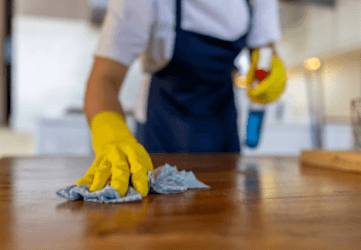
1. Mix 1 tsp dish soap (Dawn, IGA/Maxi ~$3) in 500 mL warm water. 2. Wring a microfibre cloth until barely damp. 3. Wipe door faces and handles in the direction of the grain or laminate texture. 4. Buff dry with a second dry cloth immediately.
This takes about 10 minutes for a standard Montreal galley kitchen. Do this weekly for cabinets near the stovetop and monthly for upper cabinets.
Level 2 — Monthly Deep Clean (Sticky Grease Film)
1. Make a baking soda paste: 3 tbsp baking soda (Costco/Maxi ~$3/kg) + 1 tsp dish soap + enough water to form a paste. 2. Apply to greasy areas and let sit 3–5 minutes. 3. Scrub gently with a soft toothbrush (Dollarama ~$1) on textured surfaces or a damp cloth on flat surfaces. 4. Wipe clean with a damp cloth, then buff dry.
Baking soda is mildly abrasive (finer than salt) and safe for thermofoil, melamine, painted wood, and most lacquer finishes.
Level 3 — Heavy Degreasing (Polymerized Grease / Move-Out)
Polymerized grease is the brown, hard, varnish-like coating from months of cooking near a Montreal gas stove. It smears slightly when wiped but doesn't come off with dish soap. Common in pre-war galley kitchens across NDG, Plateau, Rosemont, and HoMa.
1. Spray Krud Kutter (Canadian Tire ~$12) or TSP-PF (Canadian Tire/Home Depot ~$10–15) directly on the greasy surface. 2. Let dwell 2–3 minutes — this is critical. The degreaser needs time to break the polymerized oil chains. 3. Wipe with a non-scratch sponge. 4. Rinse with a clean damp cloth immediately — especially with TSP-PF, which dulls paint if left too long.
On thermofoil: use Krud Kutter only, not TSP-PF (which can cloud the vinyl film).
Montreal tip: A vegetable oil pre-treatment works exceptionally well on polymerized ghee, mustard oil, and olive oil residues. Rub a small amount of vegetable oil onto the grease, let sit 2 minutes (oil dissolves oil), then clean with dish soap. The grease lifts more completely than with degreaser alone.
---
Montreal Hard Water and Cabinet Doors Near the Sink
Montreal's tap water carries 90–150 mg/L of calcium carbonate — one of the highest mineral loads of any major Canadian municipal supply. Water splashing from the kitchen sink deposits a white calcium film on adjacent cabinet doors within days.
This is often mistaken for paint damage or clouding of the cabinet finish. It's completely removable:
1. Dilute white vinegar 1:3 in water. 2. Apply to a microfibre cloth (never spray directly onto thermofoil or lacquer). 3. Wipe the calcium-filmed area. The acetic acid dissolves calcium carbonate on contact. 4. Wipe dry immediately.
Never use undiluted vinegar on painted wood — repeated use softens latex paint. The 1:3 dilution is safe for all cabinet materials and can be used weekly.
---
Cleaning Inside Kitchen Cabinets
Step-by-Step Interior Clean
1. Empty completely. Remove all items and shelf liner if it's moldy or peeling. 2. Vacuum or dry-sweep. Remove crumbs and debris from corners and hinge areas. 3. Wipe shelves. Dampen a microfibre cloth with diluted white vinegar (1:4 in water). Let it dwell 2 minutes — vinegar is antibacterial and removes calcium residue. Dry completely before replacing items. 4. Check for mold. In Montreal's July–August humidity (70–75% RH), dark cabinet interiors with food spills can develop Cladosporium or Aspergillus mold within weeks. Black or grey speckling on shelving paper = mold. Remove all liner, clean the bare surface with hydrogen peroxide 3% (Pharmaprix/Jean Coutu ~$3), let dry completely. 5. Replace shelf liner. Fresh contact paper from Dollarama (~$3–5/roll) or Rona/Home Depot/IKEA (~$8–20) prevents food absorption into particleboard and makes future cleaning faster.
Montreal Moving Day (July 1) — Inheriting Dirty Cabinets
Montreal's unique July 1 lease-change culture means most renters inherit cabinets from the previous tenant. Common problems: - Dried food spills and sticky residue on shelves - Polymerized grease on interior door faces above the stovetop - Old shelf liner with mold from the previous summer
Systematic approach for inherited cabinets: Krud Kutter on greasy door interiors (dwell 2 minutes), diluted vinegar wipe on all shelves, hydrogen peroxide on any mold spots, fresh contact paper on every shelf.
---
Cabinet Hardware: Knobs, Pulls, and Hinges
Cabinet handles accumulate polymerized grease (near the stovetop), calcium deposits (near the sink), and tarnish (on brass or aged chrome).
- Chrome and brushed nickel pulls: dish soap + soft toothbrush, then buff with a diluted vinegar cloth.
- Brass hardware (heritage kitchens in Westmount/Outremont): Bar Keepers Friend paste (Canadian Tire/IGA ~$6–9) on a cloth removes tarnish and restores shine without scratching.
- Plastic knobs: dish soap + toothbrush, rinse well.
- Hinges: if sticky or causing cabinet doors to sag, clean with a toothpick + damp cloth, then apply one small drop of silicone spray lubricant (Canadian Tire ~$6). Never use WD-40 on hinges — it attracts dust and gums the mechanism over time.
---
TAL Move-Out Context
Kitchen cabinet cleanliness is consistently one of the top-3 move-out cleaning disputes at the Tribunal administratif du logement (TAL):
- Interior food debris and grease: always the tenant's responsibility to remove, regardless of what the previous tenant left.
- Thermofoil delamination: if pre-existing, the landlord cannot charge the tenant. If caused by the tenant's cleaning method (excess water), it is chargeable damage.
- Magic Eraser on painted cabinets: removes paint sheen, leaving dull flat spots — considered damage under TAL jurisprudence.
- Polymerized grease that stains permanently: chargeable. Grease that cleans off with degreaser: normal wear, not chargeable.
Photograph cabinet interiors AND exteriors at move-in to document pre-existing stains, delamination, or grease buildup.
---
Products Available in Montreal
| Product | Where to Buy | Price | |---|---|---| | Dawn dish soap | IGA / Maxi / Metro / Dollarama | ~$3 | | Baking soda | Costco / Maxi / Dollarama | ~$3/kg | | White vinegar (5%) | IGA / Maxi / Metro | ~$3–5 / 4 L | | Murphy Oil Soap | Canadian Tire / IGA | ~$8 | | TSP-PF heavy degreaser | Canadian Tire / Home Depot | ~$10–15 | | Krud Kutter degreaser | Canadian Tire | ~$12 | | Mr. Clean Magic Eraser | IGA / Maxi / Canadian Tire | ~$5 for 2 | | Bar Keepers Friend | Canadian Tire / IGA / Walmart | ~$6–9 | | Contact paper shelf liner | Dollarama / Rona / Home Depot / IKEA | ~$3–20/roll | | Hydrogen peroxide 3% | Pharmaprix / Jean Coutu | ~$3 | | Microfibre cloths | Canadian Tire / Dollarama | ~$5–12 |
---
Frequently Asked Questions
Q: How do I remove sticky grease from kitchen cabinet doors?
A: For fresh grease film, diluted dish soap on a barely damp microfibre cloth is sufficient. For sticky, tacky grease that has partially polymerized, apply a baking soda paste (3 tbsp baking soda + 1 tsp Dawn + water) for 3–5 minutes, then scrub gently and wipe clean. For hard brown polymerized grease — the result of months of cooking near a Montreal gas stove — use Krud Kutter or TSP-PF from Canadian Tire or Home Depot (let dwell 2–3 minutes before wiping). On thermofoil cabinets, use Krud Kutter rather than TSP-PF to avoid clouding the vinyl surface.
Q: Can I use Magic Eraser on kitchen cabinets?
A: On melamine laminate and thermofoil surfaces, Magic Eraser is safe and effective — it removes scuffs without scratching. On painted wood cabinet doors, however, Magic Eraser removes the paint sheen, leaving a dull flat spot visible in raking light. Under TAL jurisprudence in Quebec, this is considered damage that a landlord can charge a departing tenant for. Always test in a hidden area (inside a cabinet door) before using Magic Eraser on any painted surface.
Q: How do I clean inside kitchen cabinets before moving in Montreal?
A: Inherited cabinets at July 1 typically need a full interior clean. Remove all items and old shelf liner. Vacuum out crumbs. Wipe all shelf surfaces with a cloth dampened with diluted white vinegar (1:4 ratio) — let dwell 2 minutes to kill bacteria and dissolve mineral deposits. Spray Krud Kutter on greasy door interiors, dwell 2 minutes, wipe clean. Check for mold (black speckling on shelving paper or wood) — treat with hydrogen peroxide 3% and let dry before adding new contact paper. Install fresh contact paper (Dollarama $3–5/roll) on all shelves.
Q: What should I never use on thermofoil kitchen cabinets?
A: Three materials permanently damage thermofoil: (1) excess water — seeps under the vinyl film at edges and causes delamination that cannot be repaired; (2) TSP, bleach, or ammonia-based cleaners — cause the vinyl to cloud, crack, or permanently discolour; (3) abrasive scrubbers (green Scotch-Brite, Ajax, Vim powder) — scratch the vinyl permanently. The safe cleaning method for thermofoil is a microfibre cloth barely dampened with diluted dish soap. Wring the cloth before touching the cabinet surface and buff dry immediately after wiping.
Q: Why do my cabinet doors near the sink have a white cloudy film?
A: That's calcium carbonate mineral deposit from Montreal's tap water (90–150 mg/L hardness). Every water splash from the kitchen sink leaves a thin layer of dissolved calcium on nearby cabinet surfaces. Over days and weeks these layers accumulate into a visible white film that many tenants mistake for finish damage. It's completely removable: dilute white vinegar 1:3 with water, apply to a microfibre cloth (not directly on the cabinet), wipe, and buff dry. Repeat weekly to prevent buildup. This is especially common on cabinets immediately to the left and right of the kitchen sink.
Q: How often should I clean kitchen cabinets in Montreal?
A: Cabinets adjacent to the stovetop (within 70 cm): wipe exteriors weekly with diluted dish soap to prevent grease from polymerizing into a hard coating — once polymerized, it requires a degreaser to remove. All other cabinet exteriors: wipe monthly. Cabinet interiors: full clean every 6 months and at every move-in/move-out. Hardware (knobs, pulls): clean monthly. Hinges: check annually for stiffness; lubricate with silicone spray (Canadian Tire ~$6) as needed.
---
*For a complete kitchen refresh, see our [Montreal kitchen deep-clean guide](/en/blog/how-to-deep-clean-a-kitchen-montreal), [stovetop cleaning guide](/en/blog/how-to-clean-a-stovetop-montreal), and [range hood cleaning guide](/en/blog/how-to-clean-a-range-hood-montreal). If you're approaching a lease end, our [move-out cleaning checklist](/en/blog/move-out-cleaning-checklist-montreal) covers the full TAL-compliant standard. Or let us handle it: our [home cleaning service](/en/services/home-cleaning) and [deep cleaning service](/en/services/deep-cleaning) cover all Montreal boroughs.*

