
 *Photo: Unsplash*
Summer on a Montreal balcony or terrace is short — roughly 18 usable weekends from May to September. Outdoor cushions are expensive, and mold is the number-one reason Montrealers throw them away prematurely. This guide provides a complete cleaning and storage protocol for polyester, Sunbrella acrylic, and foam-core cushions in Montreal's specific climate: high summer humidity, urban soot, cottonwood season, and October frost.
Why Montreal Is Hard on Outdoor Cushions
Montreal's July and August sit at 70–75% relative humidity. A cushion left overnight on a patio chair absorbs morning dew, urban condensation, and evening humidity rising from the asphalt below. At 70% RH, *Cladosporium* and *Aspergillus* mold spores settle on damp polyester fabric and begin colonizing within 10–14 days. By the time dark-grey speckle appears, the mold has already penetrated the fabric weave and reached the foam core.
Two additional Montreal-specific factors accelerate cushion degradation:
Urban particulate: Plateau-Mont-Royal, Rosemont, HoMa, and Villeray street-level triplexes face diesel exhaust and brake-dust particulate from passing traffic. Cushion fabric acts as a filter, collecting the greasy dark film that coats front-facing balconies. Never wet-clean before dry-vacuuming: wetting soot drives it deeper into polyester fibres and makes it permanent.
Cottonwood (peuplier du Canada) season: Mid-May through mid-June, white fibres from neighbourhood cottonwood trees drift through balcony railings and lodge in fabric weave. Dry-brush cushions in late May before the first wet wash of the season to prevent wet cottonwood bonding permanently to the surface.
Know Your Cushion Type Before You Start
1. Sunbrella and Olefin (solution-dyed acrylic canvas) Sunbrella and Olefin are UV-stable, inherently mold-resistant, and colour-fast. They tolerate light scrubbing and hose rinsing. Mild dish soap and water handles seasonal cleaning. Do not machine-wash Sunbrella — agitation and heat break the acrylic weave backing and damage UV stabilizers. Crucially, Sunbrella canvas tolerates diluted chlorine bleach, which most other outdoor fabrics do not.
2. Polyester fabric (most budget and mid-range cushions) Polyester cushions from RONA, Canadian Tire, Structube, and Dollarama outdoor sections are the most common in Montreal. Polyester is not inherently mold-resistant — the fibre fill and foam core trap moisture. An enzyme-based fabric cleaner is your most effective tool; oxygen bleach (OxiClean) is the mold-treatment alternative. Never use chlorine bleach on polyester.
3. Open-cell foam core (present in almost all cushion types) Most outdoor cushions use open-cell polyurethane foam that absorbs and holds water like a sponge. After any wet-cleaning, squeeze the foam through the fabric to expel standing water and stand the cushion upright— never lay it flat to dry. In Montreal's July–August humidity, allow a minimum 4–6 hours of direct sun or 24 hours indoors with a fan before returning the cushion to the chair.
Step-by-Step Cleaning Protocol
Step 1: Dry Preparation First — Always
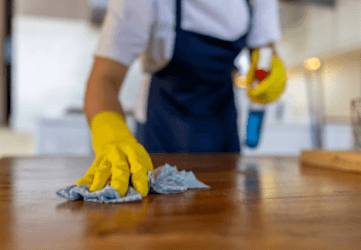
Remove cushions from the furniture and shake them over the railing or yard. Vacuum both faces with a brush attachment to remove loose grit, cottonwood fibre, and dry soot before any water contact. This is the step most Montrealers skip — wetting soot bonds it irreversibly to polyester fibres.
Remove any zip-off covers. Machine-wash covers in cold water on a gentle cycle with mild detergent and no fabric softener (softener coats fibres and reduces water repellency after drying). Air-dry flat or on a hanger; tumble-drying shrinks covers and stresses zippers.
Step 2: Choose and Mix Your Cleaning Solution
For general seasonal cleaning: Mix 2 tablespoons of mild dish soap (Dawn, Palmolive) per 4 litres of warm water in a bucket.
For mold treatment on polyester: Dissolve 60 ml of oxygen bleach (OxiClean Versatile Stain Remover, ~$10–15 at Canadian Tire) in 4 litres of warm water. Apply, let sit 10 minutes, scrub, rinse thoroughly.
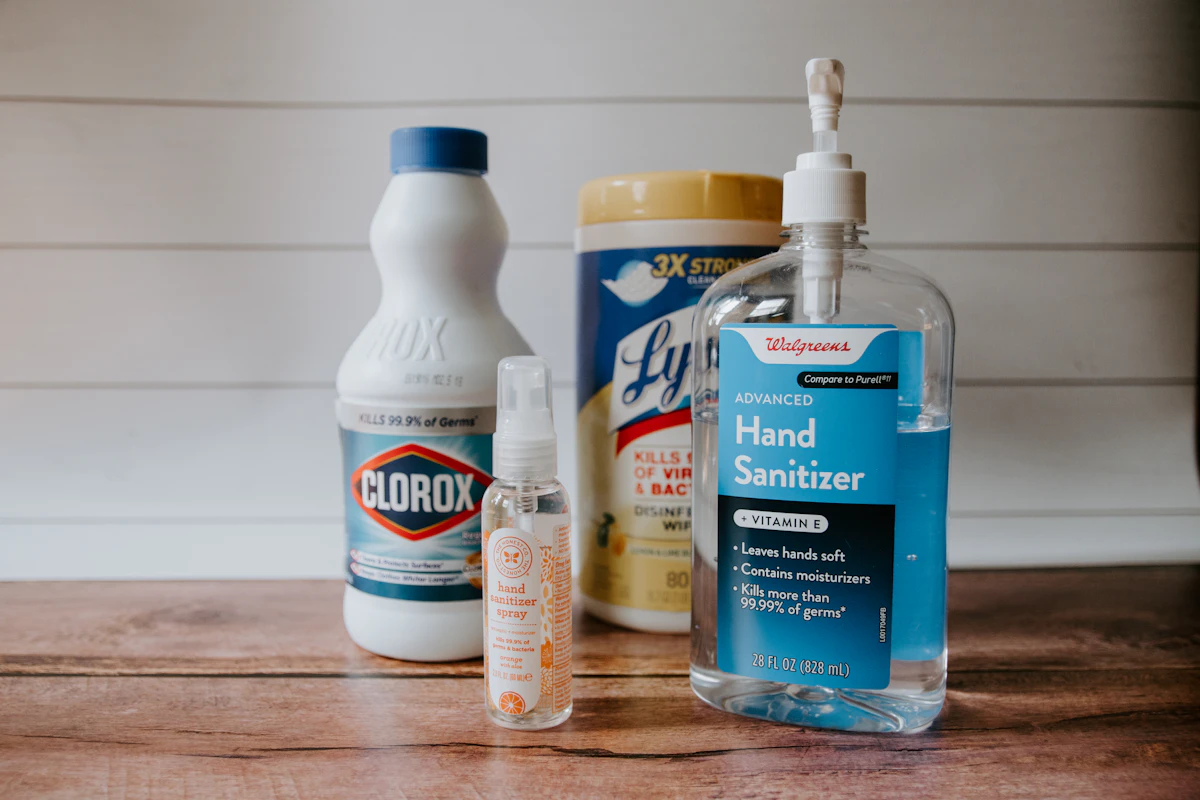
For mold treatment on Sunbrella only: Mix 60 ml of household chlorine bleach plus 30 ml of mild dish soap in 4 litres of cold water. Solution-dyed Sunbrella acrylic is bleach-tolerant. Never apply chlorine bleach to polyester or foam — it degrades polyester fibre and leaves a permanent chemical smell in foam cores.
White vinegar (1 cup per 4 litres): Effective as a deodorizer and light mold preventive, but insufficient to kill established *Cladosporium* or *Aspergillus* colonies. Use as a rinse aid, not a primary mold treatment.
Step 3: Scrub, Then Rinse Thoroughly
Apply the cleaning solution with a soft-bristle scrub brush. Work in circular motions, paying close attention to seams — mold concentrates where fabric folds trap moisture — and the underside face that contacts the chair frame. Do not submerge the cushion in a bucket; apply solution to the surface and scrub.
Rinse with a garden hose until no suds remain. Incomplete rinsing leaves soap residue that attracts new dirt faster than the original surface would. For Sunbrella, a single thorough rinse is sufficient. For polyester, rinse until the water running off is completely clear.
Step 4: Dry Completely — Non-Negotiable
Stand cushions upright against a wall or balcony railing so both faces are exposed to air and sun. Lying cushions flat traps moisture in the foam core and creates the conditions for interior mold you cannot see until it bleeds through the fabric.
In July–August, even with 6 hours of direct sun, squeeze the foam core through the fabric every 2 hours to check for internal moisture. If the cushion still feels heavy or damp at the core after 6 hours of sun, bring it inside and place it in front of a box fan overnight. The foam core must be completely dry before re-covering or storing. Interior foam mold is invisible until it causes irreversible fabric discolouration, at which point the cushion must be replaced.
Step 5: Optional Fabric Protector
Once bone dry, apply a silicone-based outdoor fabric protector spray (Scotchgard Outdoor, ~$12–18 at Canadian Tire and Home Depot). This creates a water-repellent layer that slows moisture absorption during humid Montreal nights. Reapply once per season in late spring after the first wash.
End-of-Season Storage — October Protocol
Montreal's first frost typically arrives in the first two weeks of October. The most common outdoor cushion mistake is storing damp cushions in sealed plastic bins. This creates a sealed humid environment that produces severe mold by spring.
October storage protocol, step by step:
1. Final wash by mid-September — clean before temperatures fall below 15°C, below which foam takes significantly longer to dry 2. 48-hour minimum dry — full sun plus fan if needed; the foam core must be bone dry throughout 3. Breathable storage bags — IKEA DIMPA bags (~$3–5), cotton canvas bags, or cotton sheets folded around stacked cushions. Airtight plastic bins trap condensation from October–November temperature swings (+5°C to −10°C). If you have no choice but a plastic bin, place two silica gel desiccant packets inside and leave the lid slightly ajar 4. Store off concrete — concrete draws moisture upward through foam; store on a wooden pallet, a plastic shelf, or an elevated rack 5. Indoor or covered space preferred — a balcony storage box with drainage holes works if cushions are completely dry; an unventilated box will accumulate condensation
For end-of-season deep cleaning that includes balcony and outdoor areas, see our [Deep Cleaning Service](/en/services/deep-cleaning) and [Home Cleaning Service](/en/services/home-cleaning). Related guides: [How to Clean Outdoor Patio Furniture in Montreal](/en/blog/how-to-clean-outdoor-patio-furniture-montreal) (hard surface protocols for metal, teak, resin, wrought iron), [How to Clean a Balcony in Montreal](/en/blog/how-to-clean-a-balcony-montreal) (balcony deep clean and drainage), and [How to Remove Mold and Mildew in a Montreal Apartment](/en/blog/how-to-remove-mold-and-mildew-montreal-apartment).
---
Frequently Asked Questions
Q: How long does it take for mold to grow on outdoor cushions in Montreal?
A: At Montreal's July–August relative humidity of 70–75%, mold spores (*Cladosporium*, *Aspergillus*) can colonize damp cushion fabric within 10–14 days. Cushions left overnight on furniture without drying regularly will show visible dark speckle or a musty smell within two weeks during peak summer. The key prevention step is storing cushions vertically — not lying flat on chairs — during multi-day cloudy or rainy stretches so both faces can dry. A single overnight rain event is generally not enough to trigger mold; sustained dampness over several days is the trigger.
Q: Can I machine-wash outdoor cushion covers?
A: Zip-off covers made from polyester can typically be machine-washed in cold water on a gentle cycle with mild detergent. Do not add fabric softener, which coats fibres and reduces water repellency after drying. Do not machine-wash Sunbrella or Olefin acrylic canvas covers — hot water and tumble-drying damage the backing weave and UV stabilizers that make Sunbrella mold-resistant. Air-dry all covers flat or on a hanger; never tumble-dry outdoor covers.
Q: Can I use chlorine bleach on outdoor cushions?
A: Only on Sunbrella or Olefin acrylic canvas, which is solution-dyed and bleach-tolerant: mix 60 ml bleach plus 30 ml dish soap in 4 litres of cold water, scrub, rinse thoroughly. Never use chlorine bleach on polyester fabric or open-cell foam — it degrades polyester fibre structure, leaves a permanent chemical smell in foam cores, and accelerates foam cell breakdown. The safe mold-treatment alternative for polyester cushions is oxygen bleach (OxiClean Versatile Stain Remover, ~$10–15 at Canadian Tire).
Q: Is white vinegar enough to remove mold from outdoor cushions?
A: White vinegar (acetic acid ~5%) works as a deodorizer and can prevent light surface mold from spreading, but it is not strong enough to kill established *Cladosporium* or *Aspergillus* colonies in fabric weave or foam cores. If you already see dark spots or smell mildew, use oxygen bleach solution (OxiClean, ~$10–15 at Canadian Tire) for polyester cushions, or diluted chlorine bleach for Sunbrella only. After any mold treatment, dry completely in direct sun for at least 6 hours.
Q: How should I store outdoor cushions over a Montreal winter?
A: The foam core must be completely dry — minimum 48 hours in full sun and fan — before storage. Store in breathable bags (IKEA DIMPA ~$3–5, cotton canvas) rather than sealed plastic bins, which trap condensation from October–November temperature swings. Keep cushions off concrete floors (use a wooden pallet or elevated shelf) and store in an indoor or covered space. If you must use an outdoor storage box, place two silica gel packets inside and leave the lid cracked 2 cm to allow moisture to escape.
Q: How do I remove the musty smell from outdoor cushions that have been in storage?
A: A musty smell after storage means mold has colonized the foam core, not just the fabric surface. Apply an enzyme-based fabric cleaner (Biovert or Nature Clean enzyme spray, available at IGA, Metro, and Provigo ~$8–12) generously to both faces and let it sit 15 minutes — enzyme cleaners digest the organic material mold feeds on. Alternatively, apply oxygen bleach solution (OxiClean, 60 ml per 4 L warm water) and let sit 10 minutes before scrubbing and rinsing. After cleaning, dry in direct sun for at least 6 hours. If the musty smell persists after two treatments, the foam core is too deeply contaminated and the cushion should be replaced rather than cleaned again.

