
 *Photo: Unsplash*
Montreal's summer humidity — averaging 70–75% in July and August — combined with the city's pre-war triplex housing stock and cold winter condensation patterns creates conditions that favour mold growth in nearly every apartment type. Whether you're dealing with black spots in bathroom grout, a musty smell under the kitchen sink, or white fuzz along window sills, this guide gives you a step-by-step removal and prevention protocol built for Montreal's specific housing and climate context.
Why Montreal Apartments Are Particularly Prone to Mold
Understanding why mold grows is the first step to stopping it permanently.
Summer humidity: Montreal sits in a continental humid climate zone. July and August relative humidity regularly reaches 70–75%, sometimes peaking above 90% during heat waves. Mold spores germinate at 60%+ humidity — the city's summers are well above that threshold for months at a time.
Pre-war triplex ventilation gaps: Approximately 40% of Montreal's rental housing stock was built before 1950. These stacked flats — often three floors sharing a single bathroom exhaust stack — were designed for natural ventilation through operable windows, not sealed modern standards. In buildings where landlords have installed storm windows for winter efficiency, natural air exchange drops sharply, trapping moisture from showers and cooking.
Winter condensation: From November through March, exterior temperatures regularly drop below −15°C. Single-pane glass in pre-war buildings (and older aluminum-frame double-pane in 1970s–1990s rentals) generates heavy condensation on the interior glass surface. This condensation drips onto the window sill and frame, creating a persistent moisture source that feeds Cladosporium — the most common household mold species — along window seals and curtain hemlines.
Hard water mineral deposits: Montreal's municipal water is moderately hard at 90–150 mg/L (calcium carbonate). Calcium and magnesium deposits from shower spray and steam form on grout, tile seams, and caulk — creating a textured, nutrient-rich surface where mold spores anchor more easily than on smooth, clean surfaces.
DCC restrictions in condos: If you live in a condo governed by a Déclaration de copropriété (DCC), modifications to bathroom ventilation — installing a stronger exhaust fan, adding an HRV (heat recovery ventilator), or cutting new exterior venting — may require syndicate approval. This means condo residents often cannot address the root ventilation cause as quickly as homeowners.
Safety First: DIY vs. Professional Remediation
The Quebec Institut national de santé publique (INSPQ) and the Canada Mortgage and Housing Corporation (CMHC) both provide guidance on mold remediation thresholds.
Handle it yourself if: - The affected area is less than 1 square metre (roughly 1 m × 1 m) - The mold is on a hard, non-porous surface (tile, glass, painted drywall) - There is no musty odour coming from inside walls or under flooring - The mold appears as black or green surface spots (likely Cladosporium or Aspergillus), not as a slimy, wet dark growth (Stachybotrys) on drywall
Call a professional if: - The affected area exceeds 1 square metre - You can smell mold but cannot see its source (likely inside walls, under subfloor, or in ceiling cavities) - Mold appeared after a plumbing leak, flooding, or water intrusion from a roof or exterior wall - You or a household member is immunocompromised, has a respiratory condition (asthma, COPD), or is an infant or elderly person
Supplies You Will Need
All of these are available at Canadian Tire, Jean Coutu, Pharmaprix, Home Depot, or IGA.
For removal: - Hydrogen peroxide 3% (~–4 at Jean Coutu/Pharmaprix) — most effective and safest option for enclosed apartments without good ventilation - White vinegar (undiluted) — kills 82% of mold species; available at IGA/Maxi/Metro (~–3/litre) - Borax (sodium tetraborate, non-toxic and prevents regrowth) — Jean Coutu/bulk grocery stores (~–8/500g) - Baking soda — gentle abrasive; IGA/Maxi/Metro (~)
Safety gear: - N95 respirator mask (Canadian Tire/Home Depot ~5–25 for a pack) - Nitrile gloves and safety goggles - Old clothes (mold spores cling to fabric — wash or discard after use)
Tools: - Spray bottle - Stiff-bristled grout brush or old toothbrush - Microfibre cloths (disposable or dedicated — do not reuse on other surfaces) - HEPA-filtered vacuum (to remove loose spores before wet treatment)
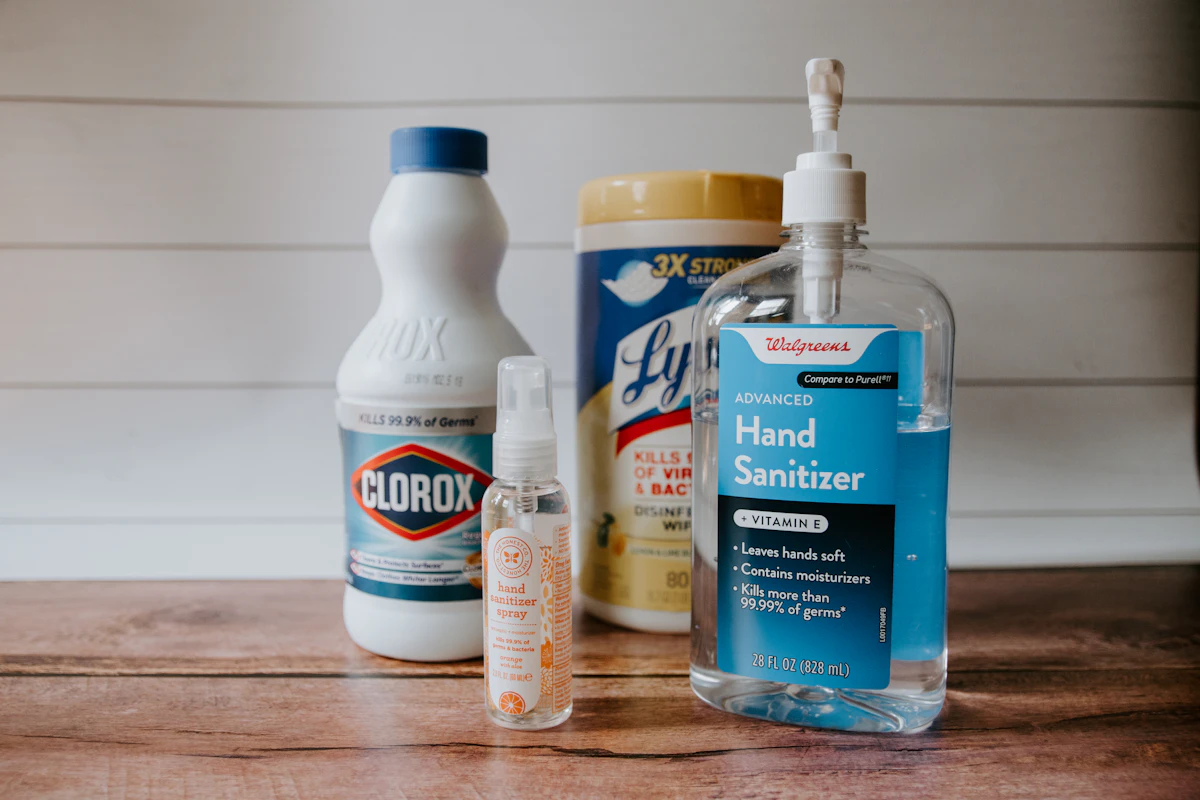
Note on bleach: Many people reach for bleach first. Bleach does kill surface mold — but it is a lung irritant in enclosed spaces, it can damage grout and coloured caulk, and it does not penetrate porous surfaces, leaving mold roots alive inside the material. In a small, poorly ventilated Montreal apartment bathroom, bleach fumes are a real risk. Hydrogen peroxide is safer, equally effective, and leaves no toxic residue.
Step-by-Step Mold Removal by Surface Type
Bathroom Grout and Tile (Most Common)
Bathroom grout is Montreal's most common mold site. Aspergillus and Cladosporium thrive in the warm, damp, calcium-rich environment of shower grout — especially in low-ventilation pre-war bathrooms.
1. Ventilate: Open the window or run the exhaust fan. If neither is possible, set a box fan in the doorway blowing outward. 2. Dry vacuum: Use a HEPA-filtered vacuum on low suction to remove loose surface spores before they go airborne during scrubbing. 3. Apply hydrogen peroxide: Fill a spray bottle with 3% hydrogen peroxide. Spray directly onto the affected grout and tile, saturating completely. Let it sit for 10 minutes — do not wipe immediately. 4. Scrub: Use a stiff grout brush in a back-and-forth motion along the grout lines. Rinse thoroughly with water. 5. Follow with borax solution: Mix 1 cup borax with 1 litre warm water. Apply to the cleaned area with a cloth. Do not rinse — let it dry. Borax leaves an alkaline residue that inhibits mold regrowth.
Window Seals and Frames (Winter Condensation Mold)
This is especially common in Montreal apartments with single-pane windows or aluminum-frame double-pane units from the 1970s–1980s.
1. Dry the area: Use a dry microfibre cloth to remove standing condensation water from the sill and frame. 2. Apply undiluted white vinegar: Spray or apply with a cloth. Let sit 1 hour. 3. Scrub with an old toothbrush: Work into the rubber seal gasket and frame corners. 4. Wipe clean and dry thoroughly. 5. Apply baking soda paste (baking soda + water) to the rubber gasket and let it dry — this absorbs future moisture and inhibits mold spore attachment.
Bathroom Ceiling
Ceiling mold is common in Montreal apartments where the exhaust fan is inadequate or blocked. The spray-and-dwell method works best to avoid dripping.
1. Safety: Wear your N95 mask and goggles — working overhead will drip product toward your face. 2. Spray hydrogen peroxide onto the ceiling in sections. Let dwell 15 minutes. 3. Wipe with a long-handled microfibre mop — do not scrub aggressively on painted surfaces. 4. Repeat if necessary. Two applications are often needed for heavily stained ceilings. 5. When fully dry: Apply a light mist of undiluted white vinegar as a preventive barrier. Let it dry without wiping.
Under-Sink Cabinets (Slow Drip Source)
Under-sink mold almost always indicates a slow plumbing drip — from the drain P-trap, the supply lines, or condensation on cold pipes. Fix the leak first, or the mold will return.
1. Empty the cabinet and remove all stored items. 2. Identify and fix the moisture source — call your landlord if it is a plumbing issue (this is their legal responsibility under the Quebec Civil Code article 1854). 3. Clean cabinet walls and base: Apply hydrogen peroxide, wait 10 minutes, scrub with a stiff brush, wipe dry. 4. For unpainted particle board (common in rental unit cabinets): if the board has swelled or disintegrated, it must be replaced — no surface cleaning will address embedded mold. Notify your landlord. 5. Line the cleaned cabinet with a shelf liner or silicone mat to prevent future moisture accumulation.
Montreal Housing Type Protocols
Pre-War Triplexes (Pre-1950)
The typical NDG, Plateau, Rosemont, Villeray, or HoMa triplex bathroom has one exhaust fan shared between floors — or none at all, relying on the bathroom window. Protocol: - Always open the bathroom window 5–10 cm after showering, even in winter (brief cross-ventilation beats sustained trapped steam) - Squeegee tile walls after every shower to eliminate standing moisture - Run the exhaust fan (if present) during the shower and for 30 minutes after - Check window sills and seals for condensation mold monthly during winter (November–April)
1960s–1990s Rental Apartments
Sealed double-pane windows in these units greatly reduce natural air exchange. Heat recovery ventilators (HRVs) are not standard in most units, so moisture from cooking and showering accumulates faster. - Use a portable dehumidifier in summer (Canadian Tire/Home Depot, ~50–300; target 45–50% indoor relative humidity) - Check under the bathroom vanity and kitchen sink monthly — older supply lines and P-traps in this era have higher slow-drip rates
Modern Condos (2000s–Present)
DCC regulations often restrict bathroom modifications. Before installing a stronger exhaust fan: - Check your declaration of co-ownership for restrictions on bathroom vent modifications - Many syndicates require a written request and approval — budget 4–8 weeks - In the interim: a portable dehumidifier and the door-ajar habit after showering are your best tools
Your Rights as a Montreal Tenant (TAL and Quebec Civil Code)
Tenant's responsibility — surface cleaning: Under Quebec Civil Code article 1911, tenants must maintain their dwelling in a clean condition. Surface mold on grout, window seals, and tile caused by inadequate ventilation habits is considered the tenant's responsibility to clean.
Landlord's responsibility — structural source: If mold is caused by a plumbing leak, roof leak, exterior water intrusion, or building structural defect, the landlord must fix the source under Civil Code article 1854 (obligation to maintain the dwelling in habitable condition). The landlord cannot deduct mold cleaning costs from your damage deposit if the mold resulted from a building defect.
INSPQ threshold: Quebec's Institut national de santé publique recommends professional remediation when visible mold exceeds 1 m². If your landlord refuses to act on structural mold above this threshold, you can file a request with the Tribunal administratif du logement (TAL) for a rent reduction or repair order.
Prevention: The Montreal Protocol
Prevention is dramatically easier than remediation.
| Habit | Frequency | Why it matters in Montreal | |---|---|---| | Squeegee shower walls after use | After every shower | Removes 75% of surface moisture before it evaporates into the air | | Run exhaust fan during + 30 min after shower | Every shower | Pre-war buildings accumulate steam rapidly | | Check window seals for condensation | Weekly (Nov–Apr) | Single-pane glass = heavy condensation every cold night | | White vinegar spray on bathroom grout | Monthly | Kills 82% of mold species and dissolves hard water deposits | | Monitor indoor humidity with a hygrometer | Ongoing (target < 50%) | AcuRite or ThermoPro at Canadian Tire, ~5–25 | | Replace tub and shower caulk | Every 2–3 years | Cracked caulk = water infiltration = mold behind tile | | Report slow leaks to landlord promptly | Immediately | Structural source — not your responsibility to fix |
When to Call Sparkling Stays
If your mold problem covers more than 1 m² of surface, is in hard-to-reach areas (high ceilings, behind appliances), recurs despite correct cleaning protocols, or you are preparing the property for a tenant inspection, move-out, or sale, professional treatment is the right call.
Our [deep cleaning service](/en/services/deep-cleaning) includes targeted mold treatment on all surfaces — bathroom, kitchen, windows, and storage areas — using professional-grade hydrogen peroxide solutions. We also offer [home cleaning](/en/services/home-cleaning) and [move-in/out cleaning](/en/services/move-in-out-cleaning) with mold-check protocols for every room. We serve all Montreal boroughs, the West Island, Laval, and the South Shore. [Contact us for a custom quote](/en/contact).
For more on how we approach [eco-friendly cleaning in Montreal](/en/blog/eco-friendly-cleaning-montreal), our guide on [how to deep clean a bathroom](/en/blog/how-to-deep-clean-a-bathroom-montreal) covers the complete bathroom protocol including mold-prone areas. Our [move-out cleaning checklist](/en/blog/move-out-cleaning-checklist-montreal) includes a mold documentation section for your TAL exit inspection.
Maintenance Schedule
| Frequency | Task | |---|---| | After every shower | Squeegee tile walls; run exhaust fan 30 min | | Weekly (Oct–Apr) | Check window seals and sills for condensation mold | | Monthly | White vinegar spray on bathroom grout; check under-sink cabinet for moisture | | Every 3 months | Inspect bathroom ceiling for early-stage spots; wipe exhaust fan cover | | Every 2–3 years | Re-caulk around tub, shower, and sink | | At move-out | Photograph all wall and ceiling mold spots; document condition and date |
Frequently Asked Questions
Q: Is mold in my Montreal apartment my landlord's responsibility or mine?
A: It depends on the cause. Surface mold on tile, grout, and window seals caused by steam and inadequate ventilation habits is the tenant's responsibility to clean under Quebec Civil Code article 1911. Mold caused by a plumbing leak, roof leak, or structural water infiltration is the landlord's responsibility under article 1854. If the source is structural and your landlord refuses to act, you can file a request at the Tribunal administratif du logement (TAL) for a rent reduction or repair order.
Q: Can I use bleach to remove mold in my Montreal apartment bathroom?
A: Bleach kills surface mold but is not recommended for Montreal apartment bathrooms. Most pre-war triplex and rental unit bathrooms have insufficient ventilation — bleach fumes (chlorine gas) are a serious lung irritant in enclosed spaces. Hydrogen peroxide 3% (Jean Coutu/Pharmaprix, –4) is equally effective at killing mold, produces no harmful fumes, and does not damage grout or coloured caulk. Pair it with a borax solution rinse to prevent regrowth.
Q: What is the white fuzzy mold on my Montreal apartment window sills?
A: White fuzz on window sills is almost always Cladosporium or Penicillium — two of the most common household mold species — growing in winter condensation moisture. It is not toxic black mold (Stachybotrys), which appears slimy and dark and grows on persistently wet drywall. Clean it with undiluted white vinegar (let sit 1 hour, scrub with a toothbrush, wipe dry) and apply baking soda paste to the rubber gasket to prevent recurrence.
Q: How do I stop mold from coming back on Montreal bathroom grout?
A: After removing existing mold, apply a borax solution (1 cup borax dissolved in 1 litre warm water) to the grout and let it dry without rinsing — borax leaves an alkaline residue that inhibits mold spore germination. Maintain a monthly white vinegar spray routine on all grout lines. Squeegee shower tile walls after every use and run the exhaust fan during and 30 minutes after showering. If the bathroom has no window and no exhaust fan, you can request your landlord install one under article 1854 of the Quebec Civil Code.
Q: My Montreal condo DCC will not let me upgrade the bathroom fan. What can I do about mold?
A: Without a ventilation upgrade, focus on habits: squeegee walls after every shower, leave the bathroom door open while the fan runs, and use a portable dehumidifier in summer (target below 50% indoor humidity, available at Canadian Tire for 50–300). A portable HEPA air purifier with a UV-C mold-kill lamp can also help — available at Canadian Tire/Best Buy for 0–150 and requires no structural modification. For persistent grout mold, a monthly white vinegar spray is your most effective preventive treatment.
Q: How do I know if the mold in my Montreal apartment is dangerous?
A: Most household mold — Cladosporium (green/black patches), Aspergillus (black powdery patches), and Penicillium (blue-green fuzzy patches) — is non-toxic but can aggravate allergies and respiratory conditions. Stachybotrys chartarum (toxic black mold) is slimy, very dark, and grows on drywall, ceiling tiles, and wood that has been wet for weeks. If you suspect Stachybotrys, do not attempt DIY removal — contact a certified mold remediation company and file a TAL complaint if your landlord refuses to address the structural water source. The Quebec INSPQ recommends professional remediation for any mold patch exceeding 1 square metre, regardless of species.

